Product Description
AI Product Description
*The following content is generated by AI and is for reference only.
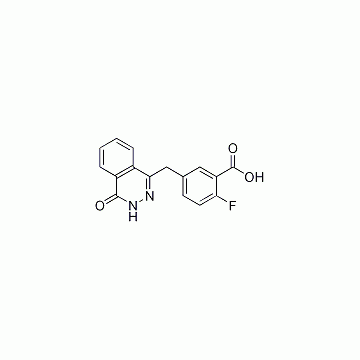
2-Fluoro-5-((4-oxo-3,4-dihydrophthalazin-1-yl)methyl)benzoic acid is a specialized organic compound belonging to the class of fluorinated phthalazine derivatives. Its molecular formula is C₁₆H₁₁FN₂O₃, reflecting a structure that integrates a benzoic acid core substituted with a fluorine atom and a methylene-linked phthalazinone moiety. While specific CAS registry numbers for this exact derivative may vary depending on precise nomenclature conventions or lack of commercial listing in major databases, it represents a critical scaffold in medicinal chemistry research. The presence of the fluorine atom is particularly significant, as it often enhances metabolic stability, modulates lipophilicity, and improves binding affinity to biological targets through favorable electronic effects.
This compound serves primarily as an advanced intermediate in the synthesis of novel pharmaceutical agents, specifically those targeting kinase inhibitors, anti-inflammatory pathways, or anticancer therapies. The phthalazinone ring system is well-known for its bioactivity profile, frequently appearing in drugs designed to inhibit vascular endothelial growth factor receptors (VEGFRs) or other tyrosine kinases involved in tumor angiogenesis. By incorporating the fluorinated benzoic acid side chain, chemists can fine-tune the pharmacokinetic properties of the final drug candidate, potentially improving oral bioavailability and reducing off-target toxicity.
In laboratory settings, this molecule is utilized in Structure-Activity Relationship (SAR) studies to explore how subtle structural modifications impact receptor selectivity and potency. Researchers employ it to construct complex heterocyclic libraries, testing various analogs against disease models to identify lead compounds. Although not currently a widely available commodity chemical found in general catalogs, it is highly valued in academic and industrial R&D departments focused on oncology and inflammatory disease treatment. The synthesis typically involves condensation reactions between fluorinated benzaldehyde derivatives and hydrazine precursors, followed by oxidation steps to form the requisite oxo-phthalazine ring. Continued investigation into such fluorinated scaffolds remains vital for developing next-generation therapeutics with improved efficacy and safety profiles, addressing unmet medical needs in chronic diseases where current treatments face limitations regarding resistance or side effects.





 (All Rights Reserved)







![5,6,7,7a-Tetrahydro thieno[3,2-c]pyridin-2(4H)-one Hydrochloride](https://eimg.pharmasources.com/img_Cphi_en/Product/2016_02/Mimg_1602021058457992.jpg)
