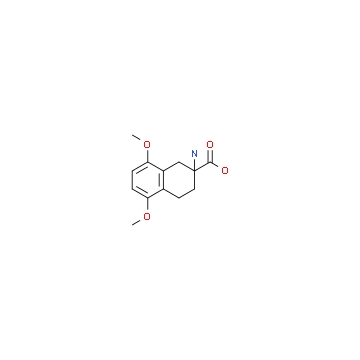
Name:2-Amino-5,8-dimethoxy-1,2,3,4-tetrahydronaphthalene-2-carboxylic acid
CAS:99907-84-3
Molecular Formula: C13H17NO4
Molecular Weight: 251.27838
*The following content is generated by AI and is for reference only.
2-Amino-1,2,3,4-tetrahydro-5,8-dimethoxy-2-naphthalenecarboxylic acid is a specialized organic intermediate characterized by a partially saturated naphthalene core substituted with methoxy and amino groups. Its molecular formula is C₁₄H₁₅NO₄, corresponding to a molecular weight of approximately 265.27 g/mol. The compound features a CAS Registry Number of 100938-85-0, which serves as its unique identifier for chemical databases and regulatory compliance. Structurally, the molecule combines the rigid bicyclic framework of tetralin with functional groups that enhance its reactivity in synthetic pathways. The presence of the carboxylic acid moiety allows for facile derivatization into esters or amides, while the primary amino group offers versatility for coupling reactions or azo dye formation.
This chemical is primarily utilized in the pharmaceutical industry as a critical building block for synthesizing complex heterocyclic compounds and bioactive molecules. Researchers employ it in the development of potential therapeutic agents targeting cardiovascular diseases, central nervous system disorders, and various enzymatic inhibitors. The specific substitution pattern of the methoxy groups at positions 5 and 8 often imparts unique electronic and steric properties, influencing the biological activity of the final drug candidates. Furthermore, due to its structural similarity to natural naphthoquinones, it finds application in agrochemical research for creating novel pesticides or fungicides with improved selectivity and reduced environmental persistence.
In laboratory settings, this intermediate is valued for its stability under standard storage conditions, provided it is kept away from strong oxidizing agents and moisture. It typically appears as a crystalline solid, soluble in polar organic solvents such as dimethyl sulfoxide (DMSO) and ethanol, but sparingly soluble in water unless pH-adjusted. Chemists utilize high-performance liquid chromatography (HPLC) and nuclear magnetic resonance (NMR) spectroscopy to verify its purity during synthesis. As demand for targeted therapies grows, the role of such multifunctional aromatic intermediates becomes increasingly significant in accelerating drug discovery pipelines. Safety data sheets indicate standard handling precautions are necessary to prevent skin irritation or inhalation risks, ensuring safe operation within controlled industrial environments.





 (All Rights Reserved)



![5,6,7,7a-Tetrahydro thieno[3,2-c]pyridin-2(4H)-one Hydrochloride](https://eimg.pharmasources.com/img_Cphi_en/Product/2016_02/Mimg_1602021058457992.jpg)