Product Description
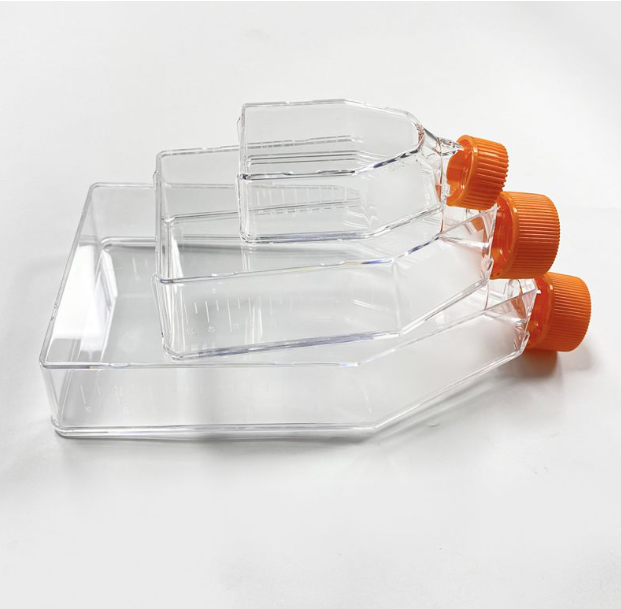
Using pure polystyrene(ps) raw materials in line with USP-Class VI standard, GMP 100,000 clean workshop production. 2 types of lids, sealed lids and vented lids. There is a frosted writing area on the side of the culture bottle neck and a volume scale on the side for easy identifification. Stackable design, easy to stack, not easy to slip. No pyrogen, no endotoxin, no cytotoxicity Irradiation Sterilization, SAL 10-6
AI Product Description
*The following content is generated by AI and is for reference only.
The 175 cm² culture area, vented cap lab volumetric plant cell tissue culture flask is a specialized laboratory vessel designed primarily for the suspension and adherent culture of plant cells, tissues, and some animal cell lines. Its defining feature is the large surface-to-volume ratio, which maximizes gas exchange and nutrient availability while minimizing shear stress on delicate biological samples. The integrated vented cap allows for passive atmospheric equilibration, preventing pressure buildup during incubation without requiring frequent opening that could compromise sterility. This design is particularly advantageous for long-term cultures where maintaining optimal pH and dissolved oxygen levels is critical for cell viability and metabolic activity.
These flasks are typically constructed from high-quality, optically clear polystyrene, ensuring excellent visibility for microscopic observation and phase-contrast imaging. The internal surface is often treated to enhance cell attachment, making them suitable for both anchorage-dependent and suspension cultures. The precise volume markings enable accurate monitoring of media consumption and growth rates, facilitating reproducible experimental conditions across different batches. Users can easily scale up experiments by utilizing multiple units with consistent performance characteristics.
When handling these vessels, strict aseptic techniques must be employed to prevent microbial contamination, which can rapidly ruin sensitive plant tissue cultures. It is essential to ensure the vented cap remains securely fastened yet functional to maintain the sterile barrier. Prior to use, flasks should be sterilized via autoclaving if they are single-use disposable units, or properly cleaned and sterilized if reusable. Avoid overfilling the flask beyond its recommended capacity to prevent spillage during agitation or transport. Furthermore, when working with photosensitive plant materials, care should be taken regarding light exposure if the flask material does not offer UV protection. Regular inspection for cracks or cloudiness is necessary to ensure structural integrity. Proper disposal according to biohazard regulations is mandatory after use. By adhering to these guidelines, researchers can effectively utilize this versatile tool for advancing plant biotechnology, genetic engineering, and fundamental physiological studies in controlled environments.





 (All Rights Reserved)