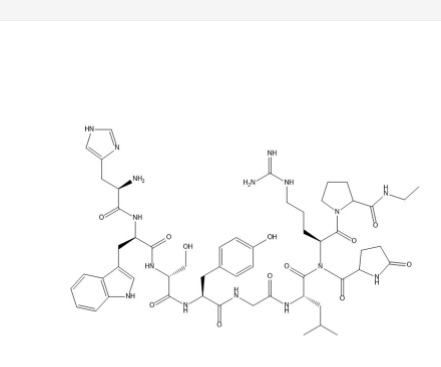
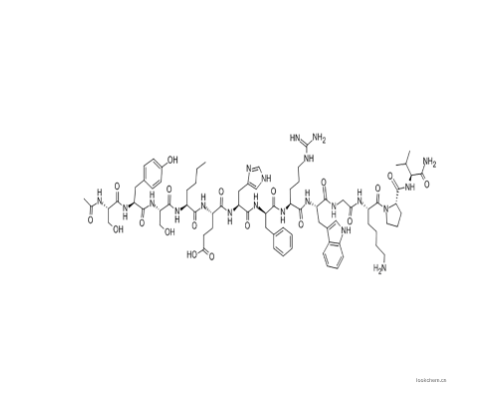
Futirelin acetate is an analog of gonadotropin releasing hormone agonist. In vivo: LH response after intramuscular or intravenous injection of futirelin acetate in a calf. Using these standards, ferrorelin acetate is 2.5 to 10 times more effective in releasing LH and FSH in cattle than gonadotropins. Storage method: freeze-dry at -20°C and store away from light Remarks: For research only, not for humans
*The following content is generated by AI and is for reference only.
The product designation "1-9-Luteinizing hormone-releasing fac" refers to a truncated peptide fragment known as Luteinizing Hormone-Releasing Hormone (LHRH) or Gonadotropin-Releasing Hormone (GnRH), specifically the decapeptide form consisting of the first nine amino acids. While the full biologically active human GnRH is a decapeptide with the sequence pGlu-His-Trp-Ser-Tyr-Gly-Leu-Arg-Pro-Gly-NH2, the "1-9" variant represents a synthetic analog lacking the terminal glycine amide. This modification often alters receptor affinity and metabolic stability, making it a valuable tool in endocrine research rather than a direct clinical therapeutic agent for standard hormone replacement.
The molecular formula for the complete decapeptide is typically C56H84N16O13S, though the 1-9 fragment will differ slightly due to the missing terminal residue. Its CAS number varies depending on the specific salt form and synthesis method, but common references for GnRH analogs often cite numbers associated with the parent compound or specific modified sequences used in laboratory settings. These peptides are primarily utilized in scientific research to investigate the hypothalamic-pituitary-gonadal axis. Scientists employ them to study receptor binding kinetics, signal transduction pathways, and the regulation of luteinizing hormone (LH) and follicle-stimulating hormone (FSH) release from the anterior pituitary gland.
In pharmaceutical development, truncated or modified GnRH analogs serve as critical starting points for creating drugs used to treat hormone-dependent cancers, such as prostate cancer and breast cancer, as well as conditions like endometriosis and precocious puberty. By modulating GnRH receptors, these agents can either stimulate or desensitize the pituitary, thereby controlling sex steroid production. The 1-9 fragment specifically aids in elucidating the structural requirements for receptor activation, helping researchers design more potent and selective agonists or antagonists. Furthermore, these compounds are essential in assisted reproductive technologies, where precise control over ovulation cycles is required. Due to their high specificity and potency, they remain indispensable in both basic biological research and advanced clinical applications aimed at managing complex hormonal disorders.





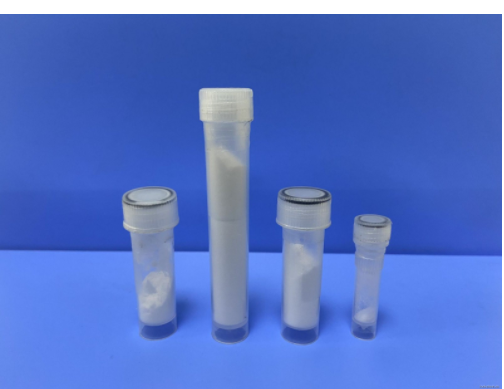
 (All Rights Reserved)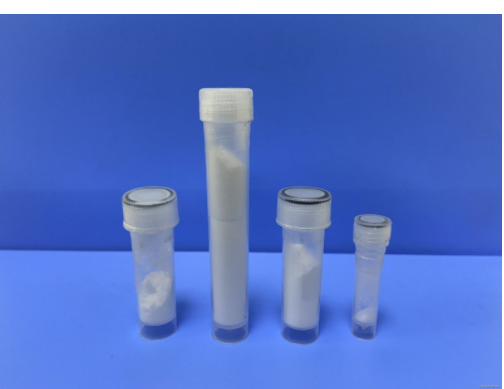

![8,16-Diazadispiro[6.1.6.2]heptadecan-17-one](https://eimg.pharmasources.com/image/product/20250403/ca91cba8b87e53fc879f8d8764873a40jpg)
![8-Oxa-1,3-diazaspiro[4.5]decane-2,4-dione](https://eimg.pharmasources.com/image/product/20250403/60fa7223d5a34f24138486ceea0ffb15jpg)
![6,8-Dioxo-5,7-diazaspiro[3.4]octane-2-carboxylic acid](https://eimg.pharmasources.com/image/product/20250403/02effeb5a7639bc84ff1f3add3c0c64fjpg)