Product Description
AI Product Description
*The following content is generated by AI and is for reference only.
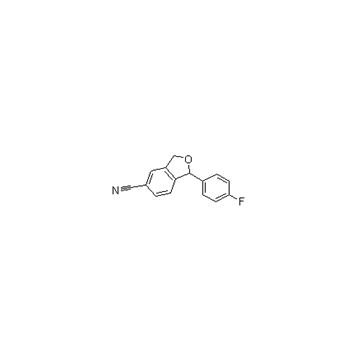
1-(4-Fluorophenyl)-1,3-Dihydroisobenzofuran-5-carbonitrile is a specialized organic compound belonging to the class of functionalized dihydroisobenzofurans. With the molecular formula C₁₅H₁₀FNO₂ and a molecular weight of approximately 255.24 g/mol, this molecule features a fused bicyclic core substituted with a fluorophenyl group at the one-position and a cyano group at the five-position. While specific CAS registry numbers for this exact derivative may vary depending on the supplier or recent synthesis records, it is structurally related to intermediates widely utilized in medicinal chemistry and agrochemical research.
The primary utility of this compound lies in its role as a versatile synthetic intermediate. The presence of the electron-withdrawing nitrile group combined with the fluorine atom on the phenyl ring significantly enhances the electrophilicity of the molecule, making it an ideal scaffold for nucleophilic substitution reactions. Researchers frequently employ such structures in the development of novel pharmaceutical agents, particularly those targeting central nervous system disorders or cardiovascular conditions, where fluorinated heterocycles are known to improve metabolic stability and bioavailability. Additionally, the rigid dihydroisobenzofuran framework provides a unique three-dimensional architecture that can influence binding affinity to biological receptors.
In the realm of materials science, derivatives of this type are occasionally explored for their potential optical properties or use as ligands in organometallic catalysis. The fluorine substituent is particularly valuable in modern drug design, often serving to modulate lipophilicity and block metabolic degradation sites. Although not typically available as a bulk commodity chemical, high-purity samples are essential for academic laboratories conducting structure-activity relationship (SAR) studies. Scientists utilize this reagent to construct complex heterocyclic libraries, facilitating the discovery of new therapeutic candidates. Its synthesis generally involves condensation reactions followed by cyclization steps, requiring careful control of reaction conditions to ensure regioselectivity. As the demand for precision medicine grows, compounds like 1-(4-fluorophenyl)-1,3-dihydroisobenzofuran-5-carbonitrile remain critical tools for chemists aiming to innovate in drug discovery pipelines.










 (All Rights Reserved)


![4-[4-(Dimethylamino)-1-(4-fluorophenyl)-1-(hydroxybutyl)]-3-(hydroxymethyl)benzonitrile hydrobromide](https://eimg.pharmasources.com/img_Cphi_en/Product/2014_12/Mimg_1412110324695471.png)




![5,6,7,7a-Tetrahydro thieno[3,2-c]pyridin-2(4H)-one Hydrochloride](https://eimg.pharmasources.com/img_Cphi_en/Product/2016_02/Mimg_1602021058457992.jpg)