Product Description
|
Molecular Formula:
|
C10H7F2N
|
|
CAS No.:
|
125126-63-8
|
|
Appearance:
|
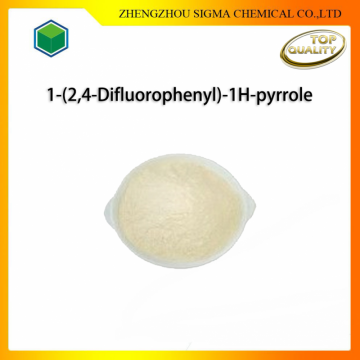
Colorless to Off-White solid
|
|
Assay:
|
98%
|
|
Synonyms:
|
1-(2,4-difluorophenyl)-1H-pyrrole;1H-pyrrole, 1-(2,4-difluorophenyl)-
|
Application:
• Fine chemical ingredient
AI Product Description
*The following content is generated by AI and is for reference only.
1-(2,4-Difluorophenyl)-1H-pyrrole, identified by CAS Registry Number 125126-63-8, is a specialized heterocyclic organic compound featuring a pyrrole ring substituted with a difluorophenyl moiety at the nitrogen position. Its molecular formula is C9H7F2N, corresponding to a precise molecular weight of approximately 173.16 g/mol. The presence of two fluorine atoms on the phenyl ring significantly alters the electronic properties and lipophilicity of the molecule compared to its non-fluorinated analogs, making it a valuable building block in modern medicinal chemistry and materials science research.
This compound serves primarily as a critical intermediate in the synthesis of complex pharmaceutical agents and bioactive molecules. In drug discovery programs, the difluorophenyl-pyrrole scaffold is often incorporated into lead compounds to enhance metabolic stability, improve binding affinity to target proteins, and optimize pharmacokinetic profiles. Fluorination is a well-established strategy to block metabolic hotspots, thereby extending the half-life of potential therapeutics. Consequently, this specific derivative is frequently utilized in the development of kinase inhibitors, anti-inflammatory agents, and other small-molecule drugs targeting neurological or oncological disorders.
Beyond pharmaceutical applications, 1-(2,4-Difluorophenyl)-1H-pyrrole finds utility in the field of agrochemicals, where it may contribute to the design of novel pesticides or herbicides with improved selectivity and reduced environmental persistence. Researchers also explore its potential in material science, particularly in the creation of functional organic semiconductors or luminescent materials, leveraging the unique electronic characteristics imparted by the fluorine substituents. Due to its high reactivity and specific structural features, strict handling protocols are recommended during laboratory use to ensure safety and prevent unintended side reactions.
While commercially available from specialized chemical suppliers for research purposes only, this substance is not typically intended for direct consumer use. Its value lies entirely within its role as a versatile precursor for advanced synthetic pathways. Scientists employ it to construct libraries of diverse heterocyclic compounds, facilitating high-throughput screening efforts aimed at identifying new therapeutic candidates. As the demand for fluorinated heterocycles continues to grow in both academic and industrial settings, 1-(2,4-Difluorophenyl)-1H-pyrrole remains an essential tool for chemists seeking to innovate in drug design and functional material development.





 (All Rights Reserved)







![5,6,7,7a-Tetrahydro thieno[3,2-c]pyridin-2(4H)-one Hydrochloride](https://eimg.pharmasources.com/img_Cphi_en/Product/2016_02/Mimg_1602021058457992.jpg)
