Product Description
Made of clean PP material, thin wall and uniform thickness can keep good heat transfer. 0.2ml strips is available in two types: Transparent and white, respectively applicable to normal PCR and real-time PCR(qPCR) reaction.Good sealing performance of the 14-strip while lid closed. Easy to open the cap without contamination.Sterilized by Gamma radiation.Sterilized by Gamma radiation.
AI Product Description
*The following content is generated by AI and is for reference only.
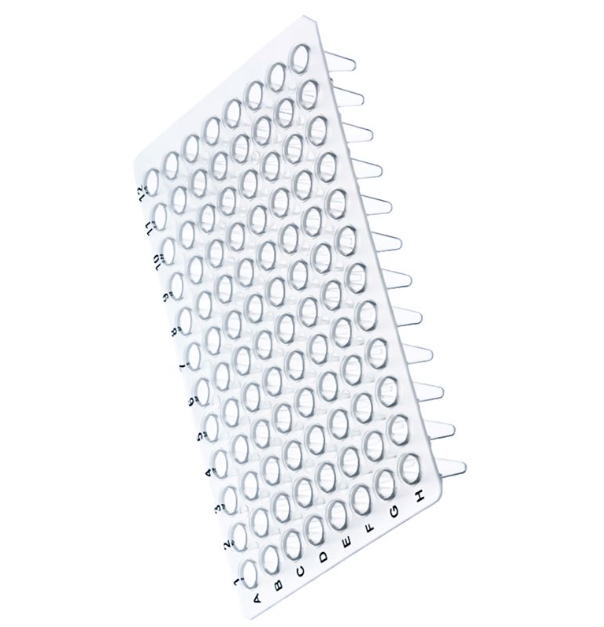
Non-skirted printed PCR plates are essential tools in modern molecular biology, specifically designed for real-time quantitative polymerase chain reaction (qPCR) and standard endpoint PCR applications. These plates feature a flat bottom profile without the extended "skirt" found on traditional 96-well formats, allowing for a more compact footprint that maximizes thermocycler capacity and ensures uniform heat transfer across all wells. The printed markings on the plate surface provide clear, permanent identification of individual well locations, significantly reducing pipetting errors during high-throughput sample processing.
Constructed from high-quality, optically transparent polypropylene, these plates offer excellent thermal conductivity and minimal background fluorescence, which is critical for accurate data acquisition in fluorescence-based detection systems. The non-skirted design facilitates easier automation with robotic liquid handlers and allows for direct sealing with adhesive film or optical caps without interference. This makes them ideal for laboratories utilizing advanced thermal cyclers that require precise temperature control and rapid cycling speeds.
When handling these plates, it is crucial to ensure they are compatible with the specific optical detection system being used, particularly regarding light transmission properties at different wavelengths. Users must always employ appropriate sealing methods to prevent evaporation, which can lead to concentration artifacts and inconsistent amplification results. Additionally, the printed labels should be checked for legibility before use, as some adhesives or solvents might degrade the ink over time if not handled carefully. Storage conditions should remain stable, avoiding extreme temperatures or direct sunlight to maintain material integrity. Proper pipetting techniques are vital to avoid cross-contamination between wells, especially when working with sensitive genetic materials. By adhering to these guidelines, researchers can achieve reproducible, high-quality data while optimizing workflow efficiency in complex genomic studies.





 (All Rights Reserved)