Product Description
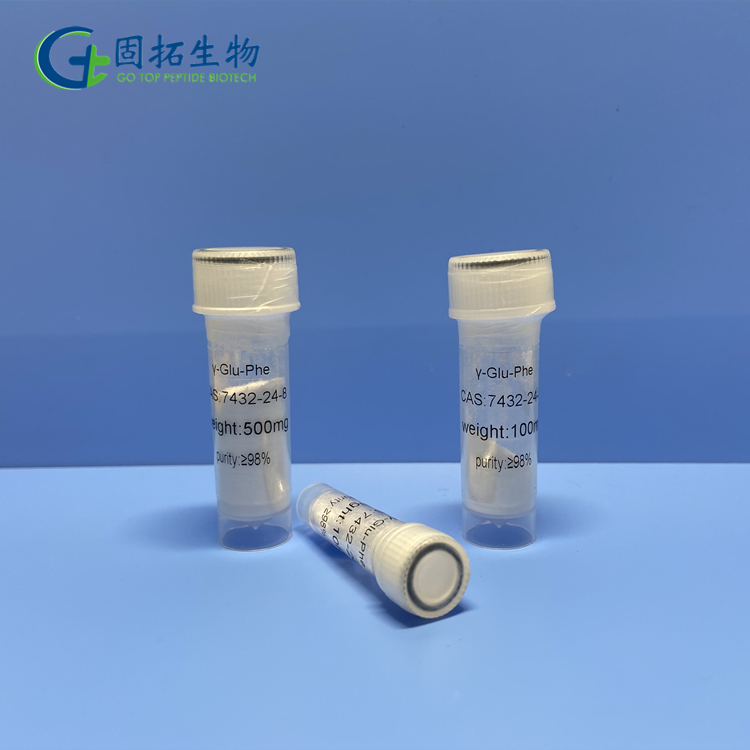
γ-Glu-Phe is a small dipeptide formed by the condensation of the carboxyl group at the γ position of Clu and the amino group of Phe. It can be synthesized by Bacillus amyloliquefaciens (GBA) and Aspergillus oryzae (GAO). γ-Glu-Phe and enzyme post-reaction mixture can enhance the umami intensity of commercial soy sauce and model chicken soup.
AI Product Description
*The following content is generated by AI and is for reference only.
Gamma-Glutamylphenylalanine, chemically known as γ-Glu-Phe, is a bioactive dipeptide composed of L-glutamic acid and L-phenylalanine linked by an unusual gamma-peptide bond. This unique structural configuration distinguishes it from standard alpha-peptides, granting it enhanced stability against proteolytic enzymes in the gastrointestinal tract. While a specific CAS number is not universally standardized for this synthetic variant in major public databases due to its status as a research-grade compound rather than a bulk commercial commodity, it is frequently cataloged under custom synthesis identifiers or associated with peptide library entries. Its molecular formula is generally represented as C14H18N2O5, reflecting the combined atomic structure of its constituent amino acids minus the water molecule formed during condensation.
The primary applications of γ-Glu-Phe are centered on advanced biomedical research and functional food development. In the pharmaceutical sector, it serves as a critical model substrate for investigating gamma-glutamyl transpeptidase (GGT) activity, an enzyme often upregulated in various cancers and liver diseases. By acting as a selective probe, researchers can better understand cellular transport mechanisms involving glutathione metabolism and oxidative stress responses. Furthermore, recent studies suggest that gamma-linked peptides may possess superior bioavailability compared to their alpha-counterparts, making them promising candidates for novel drug delivery systems designed to target specific tissues while evading rapid degradation.
In the realm of nutrition and wellness, γ-Glu-Phe is explored for its potential role in modulating blood pressure and reducing cardiovascular risk factors, leveraging the vasodilatory properties of phenylalanine derivatives when released via enzymatic hydrolysis. It is also investigated for antioxidant capabilities, potentially scavenging free radicals more effectively than free amino acids alone. Although currently limited to laboratory settings and specialized dietary supplements, the versatility of this molecule positions it at the forefront of next-generation peptide therapeutics. Future developments aim to optimize its synthesis for large-scale production, potentially unlocking broader clinical applications in treating metabolic disorders and neurodegenerative conditions where protein turnover and glutathione levels are pivotal. As research progresses, γ-Glu-Phe stands out as a fascinating bridge between basic amino acid chemistry and complex physiological regulation.





 (All Rights Reserved)