
Coronavirus is a positive-sense single-stranded RNA virus with a thick envelope, which has the largest genetic material among all the RNA viruses, and it is a key pathogen for many diseases of domestic animals, pets and human. It can cause various acute or chronic diseases. The common symptoms when people get infected with coronavirus include respiratory symptoms, fever, cough, shortness of breath and difficulty breathing. In more severe cases, the infection can even cause pneumonia, severe acute respiratory syndrome, renal failure and even death. In the research of SARS-CoV-2, also called COVID-19, everyone is discussing whether the vaccine against it is useful or not. For example, whether it can produce effective and sufficient antibodies. In this paper, we will talk about the effect of vaccine from a brand-new perspective - the size of SARS-CoV-2, and further discuss the reasons why antibodies produced after COVID-19 vaccine injection might be partially effective, ineffective or lose efficacy.
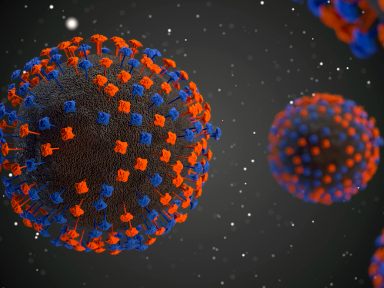
The size of SARS-CoV-2 is twice that of the original SARS virus
The initially measured and calculated size of SARS-CoV-2 is about 120-250 nanometers. However, SARS-CoV-2 is still constantly mutating and combining. Its new recombined genetic components and newly produced surface proteins might make its size bigger. At present, this known SARS-CoV-2 has a relatively larger size than other spherical RNA viruses. Comparing with the SARS virus, the SARS-CoV-2 is almost more than two times bigger than it. For example, the size of SARS virus is about 80-120 nanometers.
And the actual size of hepatitis B virus, is only about 40 nanometers. In contrast, SARS-CoV-2 is 3-7 times larger than hepatitis B virus. The size of a spherical virus we mentioned here usually refers to the diameter size of the largest cross-section of the sphere. If the maximum diameter of a spherical object is 3-7 times of another one, the surface areas of the larger one can be 10-50 times bigger than the other.
The spherical corolla of SARS-CoV-2 may make its size larger
The most distinguished feature of SARS-CoV-2 is its corolla, which is caused by the convex protein it expresses. This protein actually increases the original volume of SARS-CoV-2 in a disguised way, especially when the virus contacts with the body fluid of the human body, its spherical external surface area will increase significantly. What's more, SARS-CoV-2 does not exist individually, but in a collective way. This movement pattern might make it not exist independently in the microstate, but gather into a cluster, which leads to the enlargement of its external surface area or size under the physiological conditions of human body in the real world.
What is the neutralizing antibody in the SARS-CoV-2, such as IgM and IgG?
Antibodies generally refer to those against xx proteins or molecules, but when it comes to SARS-CoV-2 antibodies, we will add the word "neutralizing". What does this stand for? Because there is a common misconception, which is most people think that antibodies kill virus by binding to virus, but that's not how neutralizing antibody works. The neutralizing antibody essentially realizes targeted binding to SARS-CoV-2. However, it generally can't kill virus specifically but just wrap it like a ball. In this way, the virus can be blocked from entering the cell. Then, the virus can be killed or the transmission can be blocked. There are many kinds of neutralizing antibodies, and generally they are mainly S protein against SARS-CoV-2.
Common neutralizing antibodies include igM and igG. Let's look at their differences. Immunoglobulin M (IgM) and immunoglobulin G (IgG) are antibodies or immune globulins produced by the immune system to fight against infection and to destroy antigens. IgM is a pentamer molecule that appears in the early period of infection and has 10 antigen-binding sites. IgG is a monomer mol...
























 (All Rights Reserved)