
Gaurav Gaiha, MD, DPhil, a member of the Ragon Institute of MGH, MIT and Harvard, studies HIV, one of the fastest-mutating viruses known to humankind. But HIV's ability to mutate isn't unique among RNA viruses -- most viruses develop mutations, or changes in their genetic code, over time. If a virus is disease-causing, the right mutation can allow the virus to escape the immune response by changing the viral pieces the immune system uses to recognize the virus as a threat, pieces scientists call epitopes.
To combat HIV's high rate of mutation, Gaiha and Elizabeth Rossin, MD, PhD, a Retina Fellow at Massachusetts Eye and Ear, a member of Mass General Brigham, developed an approach known as structure-based network analysis. With this, they can identify viral pieces that are constrained, or restricted, from mutation. Changes in mutationally constrained epitopes are rare, as they can cause the virus to lose its ability to infect and replicate, essentially rendering it unable to propagate itself.
When the pandemic began, Gaiha immediately recognized an opportunity to apply the principles of HIV structure-based network analysis to SARS-CoV-2, the virus that causes COVID-19. He and his team reasoned that the virus would likely mutate, potentially in ways that would allow it to escape both natural and vaccine-induced immunity. Using this approach, the team identified mutationally constrained SARS-CoV-2 epitopes that can be recognized by immune cells known as T cells. These epitopes could then be used in a vaccine to train T cells, providing protective immunity. Recently published in Cell, this work highlights the possibility of a T cell vaccine which could offer broad protection against new and emerging variants of SARS-CoV-2 and other SARS-like coronaviruses.
From the earliest stages of the COVID-19 pandemic, the team knew it was imperative to prepare against potential future mutations. Other labs already had published the protein structures (blueprints) of roughly 40% of the SARS-CoV-2 virus, and studies indicated that patients with a robust T cell response, specifically a CD8+ T cell response, were more likely to survive COVID-19 infection.
Gaiha's team knew these insights could be combined with their unique approach: the network analysis platform to identify mutationally constrained epitopes and an assay they had just developed, a report on which is currently in press at Cell Reports, to identify epitopes that were successfully targeted by CD8+ T cells in HIV-infected individuals. Applying these advances to the SARS-CoV-2 virus, they identified 311 highly networked epitopes in SARS-CoV-2 likely to be both mutationally constrained and recognized by CD8+ T cells.
"These highly networked viral epitopes are connected to many other viral parts, which likely provides a form of stability to the virus," says Anusha Nathan, a medical student in the Harvard-MIT Health Sciences and Technology program and co-first author of the study. "Therefore, the virus is unlikely to tolerate any structural changes in these highly networked areas, making them resistant to mutations."
You can think of a virus's structure like the design of a house, explains Nathan. The stability of a house depends on a few vital elements, like support beams and a foundation, which connect to and support the rest of the house's structure. It is therefore possible to change the shape or size of features like doors and windows without endangering the house itself. Changes to structural elements, like support beams, however, are far riskier. In biological terms, these support beams would be mutationally constrained -- any significant changes to size or shape would risk the structural integrity of the house and could easily lead to its collapse.
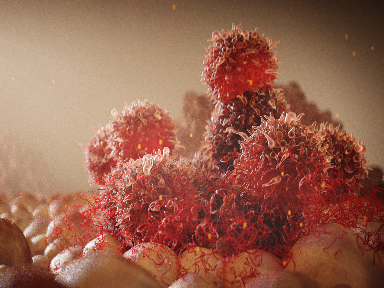
Highly networked epitopes in a virus function as support beams, connecting to many other parts ...



























 (All Rights Reserved)