
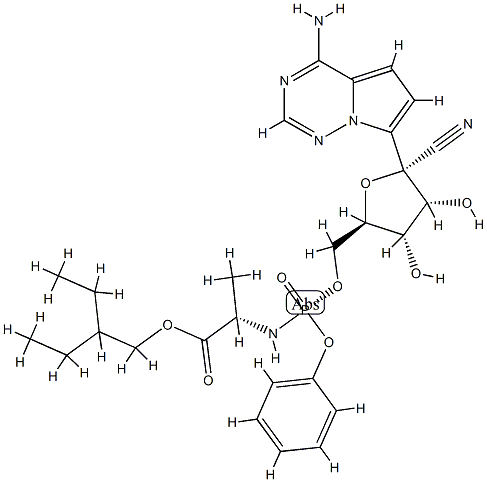
As a new experimental broad-spectrum antiviral developed by Gilead Sciences, chemically, remdesivir is essentially a nucleotide analogue, and its pharmacological mechanism of action is to “adulterate” the RNA synthesis process of the virus to ultimately inhibit the RNA-dependent RNA synthetase’s function and thus inhibit virus replication and growth. It was initially developed to mainly target the Ebola virus that has resulted in a virulent infectious disease, and the study found that it was effective in inhibiting the SARS or MERS virus in respiratory epithelial cells. As a result, it was widely used in the treatment of COVID-19 during the COVID-19 outbreak and was once pronounced as “people’s hope” or “weiruyi” in China according to its English pronunciation, showing the high expectations.

The final report on treating COVID-19 with remdesivir showing that it outperformed the placebo
The New England Journal of Medicine (NEJM) published a final report on the efficacy of remdesivir in treating COVID-19 on Nov. 5 this year. The report first mentioned that although several therapeutic agents have been evaluated for the treatment of coronavirus disease 2019 (COVID-19), no antiviral agents have yet been shown to be efficacious. The results of the report clearly show that: remdesivir was superior to placebo in shortening the time to recovery in adults who were hospitalized with COVID-19 and had signs of lower respiratory tract infection. Specifically, a total of 1,062 patients underwent randomization (with 541 assigned to remdesivir and 521 to placebo). Those who received remdesivir had a median recovery time of 10 days, as compared with 15 days among those who received placebo. The patients who received remdesivir were found to be more likely than those who received placebo to have clinical improvement at day 15. Furthermore, model estimates based on the data obtained predicted that 15 days after treatment, mortality in the remdesivir group would be 25%-43% lower than in the placebo group, while the serious adverse event rate in the remdesivir group would be lower than in the placebo group. Those results show the excellent efficacy of remdesivir, and the debate about the efficacy of remdesivir seems to be coming to a conclusion.
Only a randomized, placebo-controlled, double-blind trial is the gold standard for testing the efficacy of remdesivir
Why this current, latest study in the NEJM is called the final report? Why previous studies were not the final reports? Because this was a randomized, placebo-controlled, double-blind trial, the random method eliminated human disturbance, the placebo eliminated the influence of patients’ psychological or other factors on the results, and the double-blind approach made it impossible for either patients or physicians to know whether the “fake medicine – placebo” or the “real medicine – remdesivir” was used, further eliminating the external disturbance, and physicians did not know which drug each patient used until the day the trial was over. As such, this approach is considered the gold standard for testing the efficacy of pharmaceutical products. Anyway, if this approach is not used, there may be biases in determining the efficacy of pharmaceutical products, such as the classic “survivor effect”. To put it simply, drug A may have no therapeutic effect and may even be slightly toxic, but the survivors believe that it worked, and as they can publicize it, the efficacy of drug A may be exaggerated. However, people who are poisoned and killed or failed treatment with drug A could not speak because they are already dead or died of diseases, resulting in the toxic effects of drug A to be ignored.
Gilead is anxious as the WHO has recommended against the use of remdesivir in COVID-19 patients in the same period
Almost simultaneously with the release of the final paper in the NEJM on the validation of the efficacy of remdesivir, the World Health Organization (WHO) Guideline Development Group published an article in the British Medical Journal/BMJ st...

























 (All Rights Reserved)