

Laboratory balances are equipment for measuring the weight of samples (liquid, solid, and other forms). They are specially designed for laboratory requirements such as increased response time, reliability, compliance, and safety.
Laboratory balances are the core of every measurement performed in the pharmaceutical industry. They are commonly used for weighing analytical reference solutions, samples for performing laboratory tests, and samples for buffer preparation for various purposes such as pH calibration and spectrophotometer application.
Laboratory balances are not dedicated for use in laboratories. Instead, they can also be used in production areas, for measuring samples in areas such as In - Process labs and manufacturing sections.
Types of Laboratory Balances in the pharmaceutical industry
Let's discuss some types of balances used in the pharmaceutical industry, which are categorized as follows
Analytical balance
Micro balances
Precision balances
Moisture analyzer/balances
Analytical balances
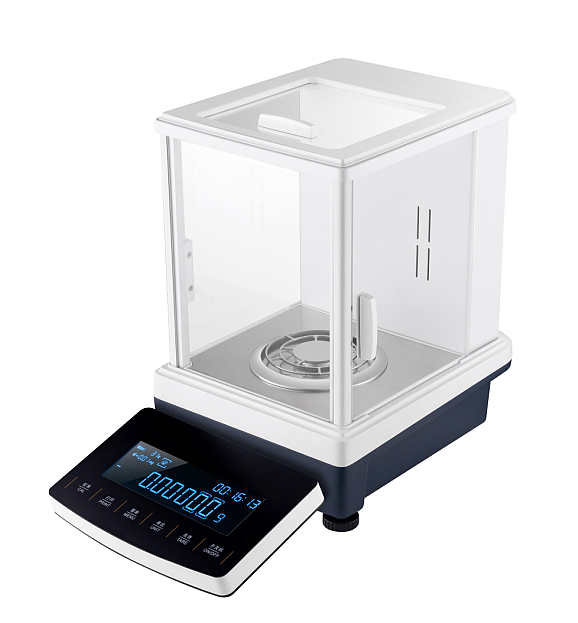
Analytical balances are designed to measure small mass samples, typically in the range of milligrams. Their ability to sense a small weight makes them so precise that they can also be affected by environmental factors such as airflow or tiny particles. To prevent the balance from these factors, balances are enclosed in a transparent enclosure.
Their ability to make precise measurements make them an ideal choice for the Pharma industry, where the measurement of small quantities of the sample can have a great impact on the final product or lab test. Additionally, analytical balances can perform measurement in more than one unit of weighing.
Precision balances
Precision balances are like analytical balances, but with lesser accuracy. They are designed to measure masses, higher than the capacity of analytical balance – in the range of grams or kilograms. These balances are cheaper than analytical balances, due to their reduced accuracy and preciseness. Since they are designed to weigh large masses, they have bigger pan sizes.
Precision balances are rigorous in nature, and are not easily affected by environmental conditions such as airflow and humidity levels.
Micro balance
Microbalances can measure masses of extremely small weight, typically in the order of million parts of a gram. They can be used as independent instruments or can be integrated with other instruments, such as moisture analyzer.
Since microbalance is capable of detecting very smaller quantities, they require a specialized and controlled environment for their placement and usage. They must be installed away from doors, windows or airflow passages to prevent affecting air during measurements.
Moisture balances/analyzers
Moisture balances or analyzers are specialized balances that help in detecting the moisture of the sample, rather than its weight. These balances work on the principle of thermogravimetric or Loss on Drying - LOD.
In moisture analyzer, the sample for which the moisture to be determined is placed on the pan. The analyzer first determines its weight with the moisture in it. Then, sample is died until the entire moisture evaporates from the sample. The heater are so effective that it dries the sample within seconds, without taking too much long.
After drying, the analyzer again weights the sample. The difference between the weight of the moist and dried sample is interpreted as moisture content in the sample.
United States and European pharmacopoeial requirements for laboratory balances
Pharmacopoeia is the collection of instructions, standards and quality rules for safe and effective manufacturing of medicines in a country or a region. It consists of tests to identify and confirm the safe composition of pharmaceutical materials (excipients, active and finished products), analytical methods, micro logical testing and QC testing.
The relevant regulatory bodi...































 (All Rights Reserved)