
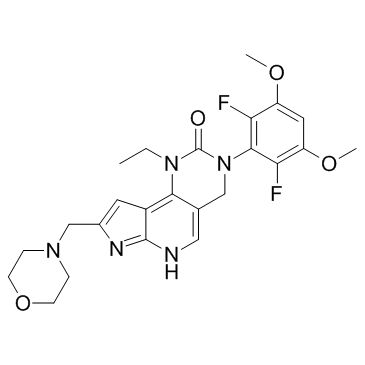
Innovent Biologics, Inc., a world-class biopharmaceutical company that develops, manufactures and commercializes high-quality medicines for the treatment of cancer, metabolic, autoimmune and other major diseases announced that the National Medical Products Administration (NMPA) of China has accepted the New Drug Application (NDA) for FGFR1/2/3 inhibitor (pemigatinib) for the treatment of adults with previously treated, unresectable locally advanced or metastatic cholangiocarcinoma with a fibroblast growth factor receptor 2 (FGFR2) fusion or rearrangement. Pemigatinib, a tyrosine kinase inhibitor discovered by Incyte, is licensed to Innovent for development and commercialization in Mainland China, Hong Kong, S.A.R., China, Macau, S.A.R., China and Taiwan, China. Pemigatinib, approved in the Taiwan, China market (trade name: Pemazyre®) on June 21, 2021, is Innovent's first approved small molecule drug and is also its fifth approved innovative drug.
The NDA submission to NMPA was based on the CIBI375A201 Study (NCT04256980), a bridging study of the FIGHT-202 (NCT02924376), which is a Phase 2, multi-center, open-label, single-arm study evaluating the safety and efficacy of pemigatinib – a selective fibroblast growth factor receptor (FGFR) inhibitor – in adult (age ≥18 years) patients with previously treated, locally advanced or metastatic cholangiocarcinoma with documented FGFR2 fusion or rearrangement. The primary endpoint in both studies was overall response rate (ORR) determined by an independent review committee (IRRC) Per RECIST V1.1. Among the 108 patients with FGFR 2 fusion/rearrangement enrolled in FIGHT-202 study, receiving pemigatinib at a dosage of 13.5mg, the ORR was 37% (95% CI:27.94%,46.86%), including 4 complete responses (3.7%) and 36 partial responses (33.3%). The median duration of response (DOR) was 8.08 months (95% CI: 5.65, 13.14) and the median progression-free survival (PFS) based on IRRC assessment was 7.03 months (95% CI: 6.08, 10.48). Pemigatinib could provide long lasting response with a median overall survival (OS) of 17.48 months (95% CI: 14.42, 22.93). The safety analysis, including 147 patients, demonstrated that pemigatinib was generally well tolerated. Hyperphosphatemia was the most common (58.5%) treatment-emergent adverse event (TEAE). TEAEs grade 3 or higher were reported in 68.7% of patients; the most frequent of which were hypophosphataemia (14.3%), arthralgia (6.1%), stomatitis (6.1%), hyponatraemia (5.4%), abdominal pain (5.4%) and fatigue (5.4%). CIBI375A201, according to the agreement with NMPA, has reached its predefined primary end point. Therefore, based on the promising results of CIBI375A201 as well as the impressive results of FIGHT-202, NDA has been submitted to the NMPA for review. For more information about FIGHT-202, please visit https://clinicaltrials.gov/ct2/show/NCT02924376 or https://ascopubs.org/doi/abs/10.1200/JCO.2021.39.15_suppl.4086
Dr. Hui Zhou, Senior Vice President of Clinical Development of Innovent, stated: 'Cholangiocarcinoma is the second most common primary liver cancer with a high incidence in Asia due to relatively widespread infection of HBV and parasites.' He emphasized that a significant portion of patients receive an initial diagnosis of unresectable and/or metastatic status with limited therapy choice. Data from previous clinical trials of pemigatinib in participants with advanced cholangiocarcinoma with FGFR2 fusion as second line or later treatment has not only shown satisfactory safety results but also revealed compelling efficacy signals. With the refractory subjects being seen as the more challenging population and based on the promising data, we believe that patients with FGFR2 fusion or rearrangement may benefit from targeted therapies. The NDA submission is a great clinical milestone, and we are looking forward to the approval of pemigatinib in the treatment of eligible patients with cholangiocarcinoma in China', Dr. Zhou highlighted.
About Advanced Cholangiocarcinoma and FGFR2 Rearrangement
Cholangiocarcinoma is a malignant tumour originated from biliary epithelium cells and it is categorized as intrahepatic or extrahepatic based on anatomical location of origin. The incidence of cholangiocarcinoma has been increasing progressively over the past decade. Surgery is the first priority for patients with resectable disease. However, most cholangiocarcinomas has been in ad...



























 (All Rights Reserved)