
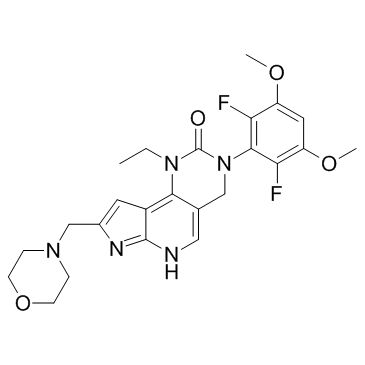
Innovent Biologics, Inc., a world-class biopharmaceutical company that develops, manufactures and commercializes high quality medicines for the treatment of oncology, metabolic, autoimmune and other major diseases, today announces that the first patient has been successfully enrolled and dosed in the clinical trial of pemigatinib (IBI375), a fibroblast growth factor receptor 1/2/3 (FGFR1/2/3) inhibitor, for the treatment of unresectable or metastatic cholangiocarcinoma in China. The study is a key component of the global Phase 3 clinical trial, which evaluates the efficacy and safety of pemigatinib versus gemcitabine plus cisplatin in first-line treatment of participants with unresectable or metastatic cholangiocarcinma with a fibroblast growth factor receptor 2 (FGFR2) rearrangement.
Dr. Hui Zhou, the Senior Vice President of Innovent, stated: 'Cholangiocarcinoma is the second most common primary liver cancer with a high incidence in Asia due to relatively widespread infection of HBV and parasites.' He emphasized that a significant portion of patients receive an initial diagnosis of unresectable and/or metastatic status and that first-line systemic therapy is typically gemcitabine plus cisplatin, with a response rate of 26%, median progression-free survival (mPFS) of 8 months and overall survival (mOS) of 11.7 months. 'The poor prognosis and the side effects associated with systematic chemotherapy increase the urgency of improving upon the treatment efficacy as well as the quality of life of patients with cholangiocarcinoma. Data from previous clinical trials of pemigatinib in participants with advanced cholangiocarcinoma with FGFR2 fusion as second line or later treatment has not only shown satisfactory safety results but also revealed compelling efficacy signals. The results demonstrate that pemigatinib has an objective response rate (ORR) of 35.5%, mPFS of 6.9 months and estimated OS of 21.1 months. With the refractory subjects being seen as the more challenging population and based on the promising data, we believe that participants with FGFR2 rearrangement may benefit from targeted therapy like pemigatinib. We are looking forward to see the therapeutic contribution of pemigatinib in the treatment of cholangiocarcinoma as the pre-NDA process of the drug in China is under preparation', Dr. Zhou highlighted.
About Advanced Cholangiocarcinoma and FGFR2 Rearrangement
Cholangiocarcinoma is a malignant tumour originated from biliary epithelium cells and it is categorized as intrahepatic or extrahepatic based on anatomical location of origin. The incidence of cholangiocarcinoma has been increasing progressively over the past decade. Surgery is the first priority for patients with resectable disease. However, most cholangiocarcinomas has been in advanced and/or metastatic status at diagnosis and lost the chance for surgical resection. The treatment options for patient who relapse after surgery or have advanced / metastatic disease are limited and the recommended therapy method is systemic chemotherapy with gemicitabine plus cisplatin, which has a medium overall survival of less than a year.
Aberrant signaling through FGFR resulting from gene amplification or mutation, chromosomal translocation, and ligand-dependent activation of the receptors has been demonstrated in multiple types of human cancers. Fibroblast growth factor receptor signaling contributes to the development of malignancies by promoting tumor cell proliferation, survival, migration, and angiogenesis. Results from early clinical studies of selective FGFR inhibitors, including pemigatinib, have shown a tolerable safety profile for the class and preliminary signs of clinical benefit in participants with FGF/FGFR alterations.
About Pemigatinib (Pemazyre®)
In April 2020, the U.S. Food and Drug Administration (FDA) approved Incyte's Pemazyre® (pemigatinib), a selective, oral inhibitor of FGFR isoforms 1, 2 and 3, for the treatment of adults with previously treated, unresectable locally advanced or metastatic cholangiocarcinoma with a fibroblast growth factor receptor 2 (FGFR2) fusion or rearrangement as detected by an FDA-approved test. Continued approval for this indication may be contingent upon verification and description of clinical benefit in a confirmatory trial(s).
In Japan, Pemazyre is approved for the treatment of patients with unresectable biliary tract cancer with a ...



























 (All Rights Reserved)