
The Q2 2024 financial reports have highlighted a notable divergence in oncology and immunology products, with trends becoming increasingly evident. Specifically, there is a balance between small molecules and monoclonal antibody drugs (mAbs) in the realm of oncology super blockbuster drugs, while immunology appears dominated by monoclonal antibodies and protein-based treatments.
1. Divergence in Blockbuster Modalities in Oncology and Immunology
Table 1 highlights the top ten oncology products by sales for Q2 2024. Keytruda maintains its dominant position at the top. Among the top ten oncology products, there are six small molecule drugs, with the remaining four spots occupied by monoclonal antibodies (Figure 1). In terms of sales volume, thanks to Keytruda's exceptional performance, monoclonal antibody oncology drugs in the top ten generated USD13.69 billion, capturing 62% of the market share, while the six small molecule oncology drugs produced a total of USD8.46 billion, accounting for 38% of the market share (Figure 2).
Table 1. Top Ten Oncology Products by Sales Volume in Q2 2024
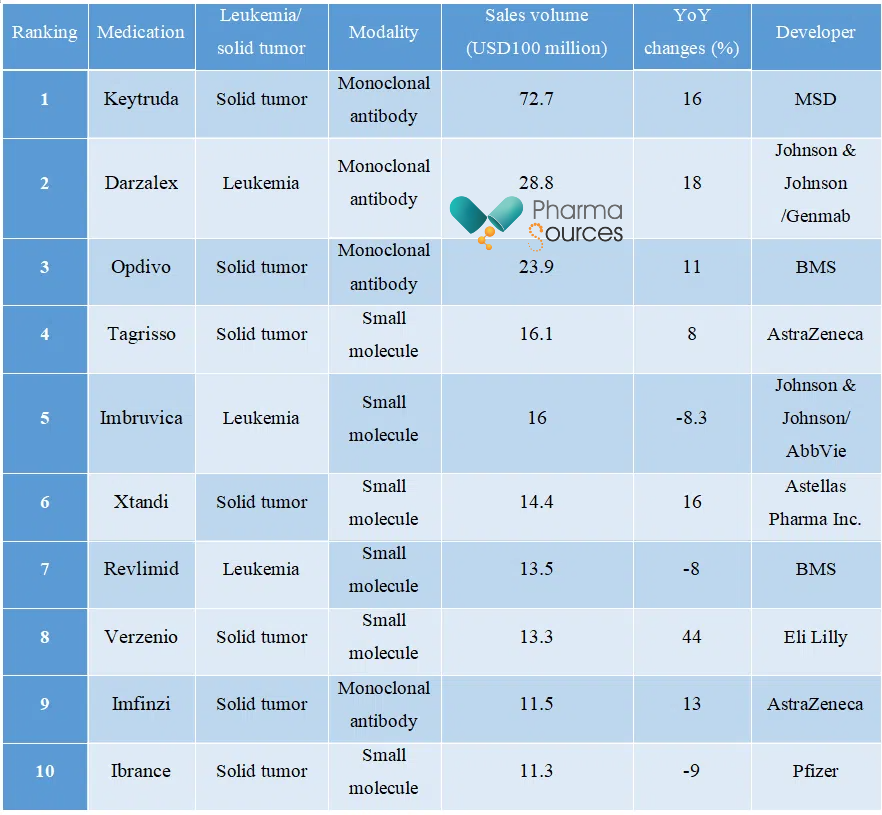
Number Distribution of Top 10 Oncology Products Modalities in Q2 2024
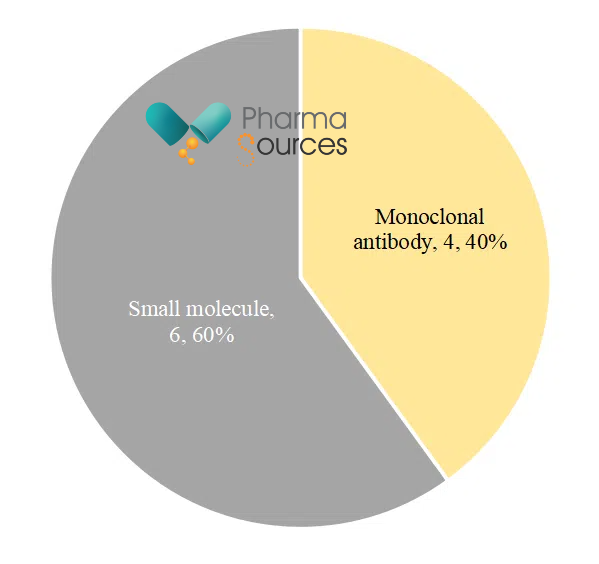
Distribution of Sales Volume (USD100 Million) for Top 10 Oncology Drug Modalities
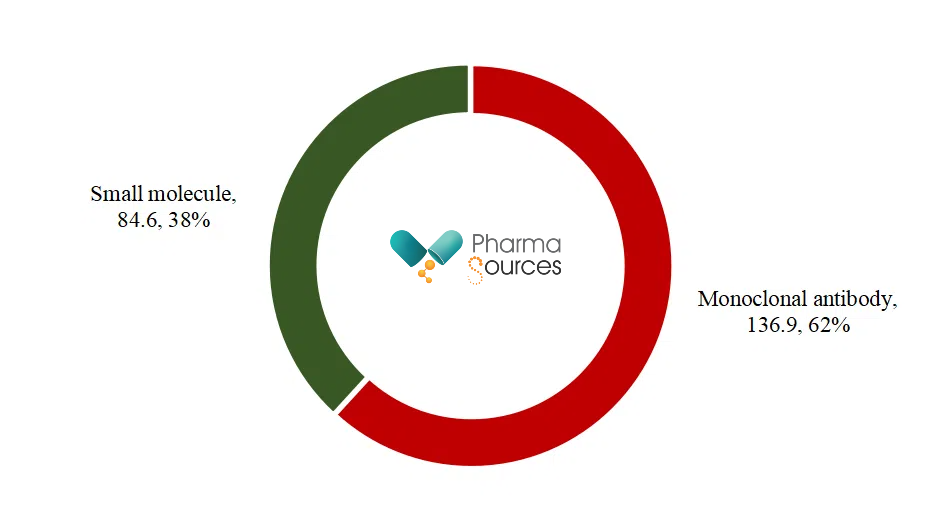
Figure 2. Sales Volume of Top 10 Oncology Drug Modalities in Q2 2024
In stark contrast, the Q2 2024 lineup of top ten immunology products is almost entirely composed of monoclonal antibodies and fusion proteins (Table 2). Of the top ten immunology drugs by sales, seven are monoclonal antibody products, two are fusion proteins, and only one small molecule drug, AbbVie's newcomer Rinvoq (Upadacitinib), made the list (Figure 3). This Janus kinase small-molecule inhibitor received FDA approval in August 2019 and has since climbed into the top ten in immunology drug sales. It achieved sales of USD 1.43 billion in Q2 2024, with a year-over-year growth of 56%, showcasing its strong performance. However, Rinvoq remains an outlier in the immunology domain; even expanding the list to 15 shows it is still the only small molecule, as ranks 11 to 15 are entirely held by monoclonal antibodies (e.g., Tremfya (Johnson & Johnson, USD 910 million), Taltz (Eli Lilly, USD 820 million), Actemra (Roche, USD 740 million), Nucala (GSK, USD 610 million), and Simponi (Johnson & Johnson, USD 540 million)).
From a sales perspective, Rinvoq, as an isolated example of a small molecule drug, accounted for just 7% of total sales in the top ten, while proteins and mAbs accounted for 11% and 82%, respectively, demonstrating the overwhelming dominance of protein and antibody therapeutics over small molecule immunology drugs.
Table 2. Top Ten Immunology Products by Sales Volume in Q2 2024



























 (All Rights Reserved)