Category:
Plant Extracts
CAS NO:
-
Standard:
ChP,

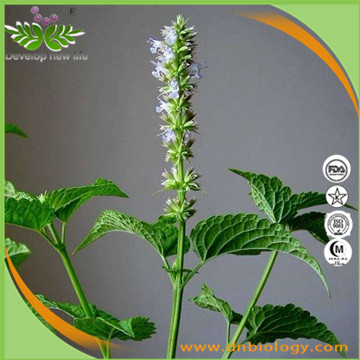
Product Name: Wrinkled Gianthyssop Herb
Botanical Name:Agastache rugosus (Fisch. Et Mey.)O.ktze.
Part Used:aerial part
Specification:8:1,10:1,20:1
CAS No:23800-56-8
Molecular Formula: C12H16O4
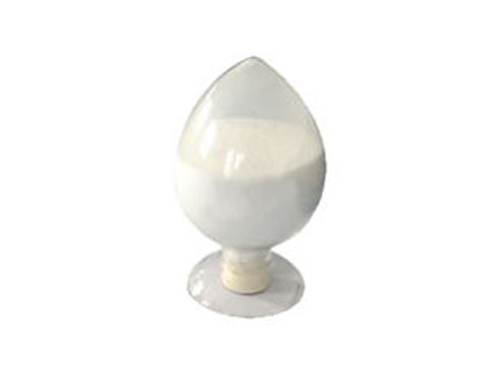
Appearance:Tan Powder
Introduction
Agastache is the part above the ground of the perennial plant Agastache rugosa (Fisch. et C. A. Mey.) Kuntze, or Pogostemon cablin (Blanco) Benth., of the Lamiaceae/Labiatae family. Native to east Asia, the plant is grown on grassy places in mountains, especially by streams, and in valleys all over China, Japan, Korea and Siberia.
The perennial plant grows to about 1 m by 0.6 m. It is in flower from July to September, and the seeds ripen in September. The flowers are hermaphrodite (have both male and female organs) and are pollinated by bees. It is noted for attracting wildlife. The plant cannot grow in the shade. It requires dry or moist soil.
In China, agastache is mainly produced in the southern province Guangdong. Reaped in summer and autumn when the branches and leaves are in their utmost luxuriance, the stem is cut into lengths when fresh for use or dried in the air for use when raw.
Where will Wrinkled Gianthyssop Herb Extract used to?
Resolves dampness, relieves summer-heat and arrests vomiting.
Agastache is commonly used in Chinese herbalism, where it is considered to be one of the 50 fundamental herbs. Considered to be a "warming" herb, it is used in situations where there is "dampness" within the digestive system, resulting in poor digestion and reduced vitality.
In addition, young fresh leaves with their strong anise-like fragrance are normally used as a flavoring or as an addition to the salad bowl.
The grown leaves can be used as a tea substitute for their pleasant flavor.
Application :
1. To treat syndromes of retention of dampness in the spleen and stomach
2. To treat initial attacks of diseases caused by pathogenic summer-heat and dampness and damp-warm syndromes
3. To treat vomiting


 (All Rights Reserved) (All Rights Reserved)