Product Description
Whether to import
no
model
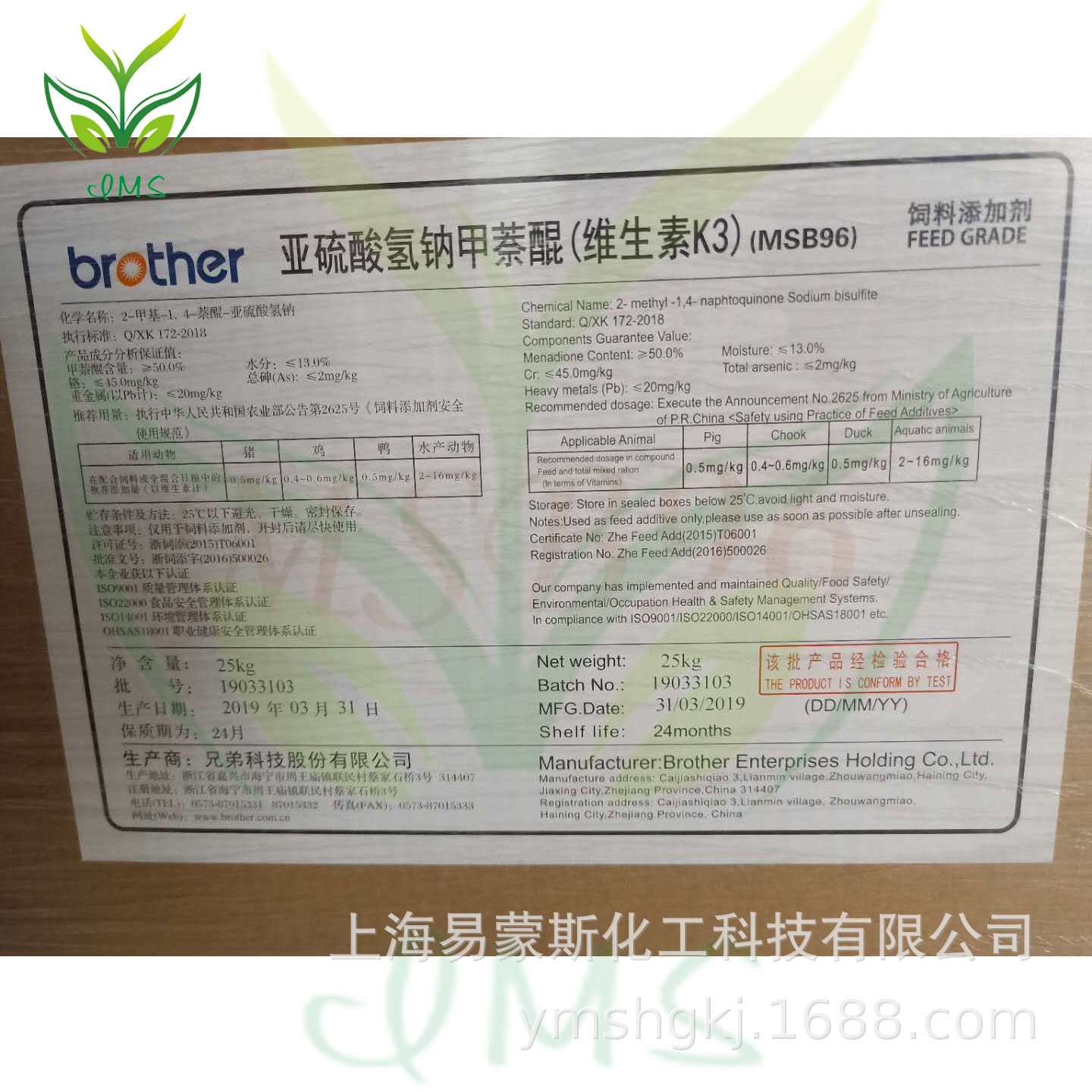
Vitamin K3
Item No.
58-27-5
brand
Consult customer service
Classification
Vitamins
Effective substance content
98 (%)
Product specifications
25KG
The main purpose
Feed additive raw materials, mainly can promote the synthesis of prothrombin in the liver of livestock and poultry, and promote the synthesis of plasma coagulation factors in the liver
CAS
AI Product Description
*The following content is generated by AI and is for reference only.
Vitamin K3, chemically known as menadione or 2-methyl-1,4-naphthoquinone, is a synthetic form of vitamin K essential for blood coagulation and bone metabolism. With the molecular formula C₁₁H₈O₂ and a CAS number of 58-27-5, this yellow to orange crystalline powder is widely utilized in both human medicine and animal nutrition. Unlike natural vitamins K1 (phylloquinone) and K2 (menaquinone), which are derived from plants and bacteria respectively, Vitamin K3 is manufactured synthetically due to its stability and cost-effectiveness.
The primary function of menadione revolves around its role as a precursor to active vitamin K. Once ingested, it is converted within the body into menaquinone-4, facilitating the carboxylation of glutamic acid residues in specific proteins. This biochemical process is critical for activating clotting factors II, VII, IX, and X, thereby ensuring proper hemostasis and preventing excessive bleeding. Consequently, it has historically been used therapeutically to treat hypoprothrombinemia caused by vitamin K deficiency or anticoagulant overdose.
In the agricultural sector, Vitamin K3 is extensively added to poultry and livestock feed supplements. It plays a vital role in maintaining bone health and preventing hemorrhagic diseases in animals, particularly in young chicks where natural sources may be insufficient. Its inclusion ensures optimal growth rates and reduces mortality associated with bleeding disorders. However, regulatory bodies such as the FDA have restricted its use in human food and cosmetics due to potential toxicity concerns at high doses, including liver damage and hemolytic anemia. While safe when administered under strict veterinary guidance or medical supervision, its application in human dietary supplements has largely been replaced by safer alternatives like menatetrenone. Despite these limitations, menadione remains a cornerstone compound in industrial vitamin production, serving as a reliable source of vitamin K activity where stability and economic efficiency are paramount. Its distinct chemical structure allows for versatile formulation in tablets, injectables, and premixes, making it an indispensable tool in global health and agriculture sectors despite ongoing safety evaluations.




 (All Rights Reserved)