Product Description
Product Description
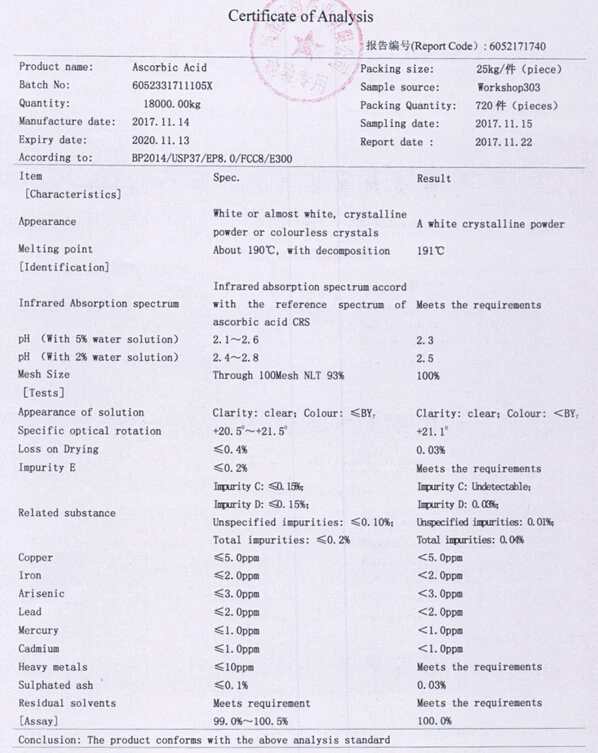
COA for Vitamin C Ascorbic Acid (vc) 100 MESH/200 MESH:
AI Product Description
*The following content is generated by AI and is for reference only.
Vitamin C, chemically known as L-ascorbic acid, is an essential water-soluble vitamin vital for human health and widely utilized across various industries. Its molecular formula is C₆H₈O₆, and it carries the CAS number 50-81-7. As a powerful antioxidant, Vitamin C plays a critical role in neutralizing free radicals, thereby protecting cells from oxidative stress and supporting the immune system. In biological systems, it acts as a necessary cofactor for several enzymes involved in collagen synthesis, which is crucial for maintaining skin elasticity, wound healing, and connective tissue integrity. Furthermore, it enhances iron absorption from plant-based foods and aids in neurotransmitter production.
Beyond its nutritional significance, Vitamin C is extensively used in the food and beverage industry as a preservative and antioxidant to prevent spoilage and maintain color stability. It helps inhibit enzymatic browning in fruits and vegetables and extends shelf life by preventing oxidation. In the cosmetic sector, this compound is a staple ingredient in skincare formulations due to its ability to brighten skin tone, reduce hyperpigmentation, and stimulate collagen production. Many serums, creams, and lotions incorporate Vitamin C to combat signs of aging and improve overall skin texture. Additionally, it finds applications in pharmaceuticals as a dietary supplement to treat or prevent scurvy, a disease caused by severe deficiency. The versatility of Vitamin C stems from its stability in processed forms and its efficacy in both therapeutic and preventative contexts. Whether consumed orally or applied topically, its benefits are well-documented through extensive scientific research. Global demand continues to rise driven by increasing health awareness and the expanding beauty market. Manufacturers often synthesize it via fermentation processes to ensure high purity and bioavailability. Overall, Vitamin C remains one of the most indispensable compounds in modern medicine, nutrition, and personal care, bridging the gap between biological necessity and industrial application with remarkable efficiency.









 (All Rights Reserved)