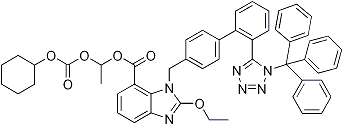
Huateng Pharmaceutical, a global supplier of pharmaceutical intermediates, offers Candesartan intermediates Trityl candesartan cilexetil (CAS NO. 170791-09-0) for your requirements of R&D, evaluation, pilots and commercial along with supportive technical package required for evaluation.
*The following content is generated by AI and is for reference only.
Trityl candesartan cilexetil is not a recognized pharmaceutical compound or commercial product. Candesartan cilexetil, however, is a well-established prodrug of the angiotensin II receptor blocker (ARB) candesartan, widely used in clinical practice for managing hypertension and heart failure. The molecular formula of candesartan cilexetil is C28H30N6O6, with a CAS number of 144689-57-2. It functions by selectively blocking the binding of angiotensin II to the AT1 receptors in vascular smooth muscle cells, thereby inhibiting vasoconstriction and aldosterone secretion. This mechanism leads to reduced peripheral resistance and lower blood pressure without affecting bradykinin metabolism, minimizing side effects like cough commonly associated with ACE inhibitors.
The "trityl" prefix may stem from confusion with trityl chloride or other protecting groups used in synthetic chemistry during drug development, but no such derivative as "Trityl candesartan cilexetil" exists in approved pharmacopeias or regulatory databases. In pharmaceutical synthesis, trityl groups are sometimes employed temporarily to protect hydroxyl functionalities during multi-step organic reactions, but they are removed prior to final formulation due to their lack of therapeutic activity and potential toxicity. Candesartan cilexetil itself is designed for oral administration, offering high bioavailability after conversion to its active metabolite, candesartan, in the intestinal wall and liver.
Clinically, this agent is indicated for essential hypertension, often as monotherapy or in combination with diuretics like hydrochlorothiazide. It is also prescribed for chronic heart failure to reduce cardiovascular mortality and hospitalization rates. Patients benefit from its once-daily dosing regimen and favorable safety profile, including minimal impact on electrolyte balance compared to older antihypertensives. Common adverse events include dizziness, headache, and fatigue, though serious complications such as hyperkalemia or renal impairment are rare when used appropriately. Regulatory agencies including the FDA and EMA have approved various brand names containing candesartan cilexetil since the early 2000s, establishing it as a cornerstone therapy in modern cardiovascular medicine. Any reference to a "trityl" variant likely reflects an error in nomenclature or a misunderstanding of synthetic intermediates rather than an actual marketed drug product.





 (All Rights Reserved)

![8,16-Diazadispiro[6.1.6.2]heptadecan-17-one](https://eimg.pharmasources.com/image/product/20250403/ca91cba8b87e53fc879f8d8764873a40jpg)


![8-Oxa-1,3-diazaspiro[4.5]decane-2,4-dione](https://eimg.pharmasources.com/image/product/20250403/60fa7223d5a34f24138486ceea0ffb15jpg)
![6,8-Dioxo-5,7-diazaspiro[3.4]octane-2-carboxylic acid](https://eimg.pharmasources.com/image/product/20250403/02effeb5a7639bc84ff1f3add3c0c64fjpg)



