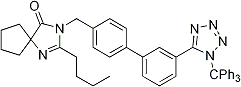
Huateng Pharmaceutical, a global supplier of pharmaceutical Intermediates, offers Irbesartan Intermediates Triphenyl irbesartan (CAS NO. 138402-10-5) for your requirements of R&D, evaluation, pilots and commercial along with supportive technical package required for evaluation.
Application: It is a useful building block, especially in the preparation of the antihypertensive drug, irbesartan.
*The following content is generated by AI and is for reference only.
Triphenyl irbesartan is a specialized chemical derivative of the widely used antihypertensive agent irbesartan. While standard irbesartan (CAS 138402-11-6) is an angiotensin II receptor blocker (ARB) utilized clinically to manage high blood pressure and diabetic nephropathy, "triphenyl irbesartan" refers to a modified molecular structure where triphenyl groups are likely attached to the parent scaffold. It is important to note that this specific derivative does not appear in standard clinical pharmacopeias or approved drug databases as a therapeutic agent for human use. Instead, it is primarily encountered in academic research, medicinal chemistry laboratories, and pharmaceutical development contexts.
The molecular formula of this compound varies depending on the exact nature of the triphenyl substitution, but it generally involves a significant increase in molecular weight compared to the parent drug due to the addition of three phenyl rings. In terms of CAS identification, no unique CAS number is currently registered for "triphenyl irbesartan" as a distinct commercial product; researchers typically synthesize such analogs to study structure-activity relationships (SAR). The primary purpose of creating these derivatives is to investigate how structural modifications affect binding affinity to the AT1 receptor, metabolic stability, and lipophilicity. By introducing bulky hydrophobic groups like triphenyl moieties, scientists aim to optimize the pharmacokinetic profile or explore novel mechanisms of action for cardiovascular diseases.
Furthermore, such compounds serve as valuable tools in drug discovery pipelines. They help chemists understand the spatial requirements of the receptor binding pocket and may lead to the design of next-generation ARBs with improved efficacy or reduced side effects. However, due to the lack of regulatory approval, triphenyl irbesartan is strictly limited to laboratory settings and is not available for patient treatment. Its synthesis requires advanced organic chemistry techniques, and its properties are evaluated through rigorous in vitro and in vivo testing before any potential clinical translation could be considered. Consequently, while it holds scientific significance for advancing cardiovascular therapeutics, it remains a research-grade intermediate rather than a marketed pharmaceutical product.





 (All Rights Reserved)

![8-Oxa-1,3-diazaspiro[4.5]decane-2,4-dione](https://eimg.pharmasources.com/image/product/20250403/60fa7223d5a34f24138486ceea0ffb15jpg)
![6,8-Dioxo-5,7-diazaspiro[3.4]octane-2-carboxylic acid](https://eimg.pharmasources.com/image/product/20250403/02effeb5a7639bc84ff1f3add3c0c64fjpg)
![8,16-Diazadispiro[6.1.6.2]heptadecan-17-one](https://eimg.pharmasources.com/image/product/20250403/ca91cba8b87e53fc879f8d8764873a40jpg)