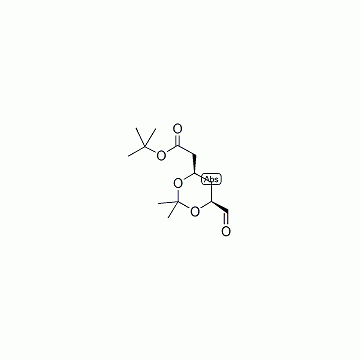
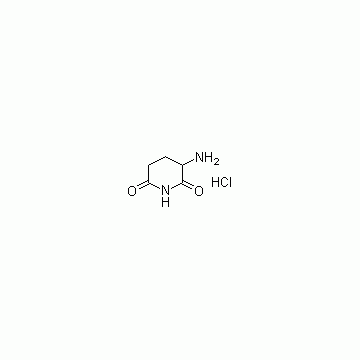
Product Description
Triamcinolone acetonide 76-25-5
AI Product Description
*The following content is generated by AI and is for reference only.
Triamcinolone acetonide is a potent synthetic glucocorticoid widely utilized in modern medicine for its robust anti-inflammatory, antipruritic, and immunosuppressive properties. Chemically known by the systematic name 9-fluoro-11β,16α,17,21-tetrahydroxypregna-1,4-diene-3,20-dione cyclic 16,17-acetal with acetone, this compound features the molecular formula C₂₄H₃₁FO₅ and carries the CAS Registry Number 127-56-8. Its unique chemical structure, characterized by a fluorine atom at the C9 position and an acetonide group protecting the C16 and C17 hydroxyls, significantly enhances its topical potency while reducing systemic absorption compared to earlier generations of corticosteroids.
Clinically, triamcinolone acetonide serves as a versatile therapeutic agent across multiple medical disciplines. In dermatology, it is a first-line treatment for various inflammatory skin conditions, including eczema, psoriasis, allergic contact dermatitis, and lichen planus. It is frequently formulated into creams, ointments, lotions, and gels to alleviate symptoms such as redness, swelling, itching, and irritation. Beyond topical applications, the drug is extensively used in intra-articular injections to manage acute flare-ups of osteoarthritis and rheumatoid arthritis, providing rapid relief from joint pain and inflammation. Additionally, it plays a critical role in ophthalmology for treating anterior segment inflammation and in respiratory medicine as an inhaled corticosteroid for asthma management, helping to control airway inflammation and prevent exacerbations.
The mechanism of action involves binding to cytoplasmic glucocorticoid receptors, which translocates to the nucleus to modulate gene expression. This process inhibits the synthesis of pro-inflammatory mediators like prostaglandins and leukotrienes while suppressing immune cell migration. While highly effective, long-term or improper use can lead to adverse effects such as skin atrophy, telangiectasia, or hypothalamic-pituitary-adrenal axis suppression if absorbed systemically. Consequently, medical professionals carefully tailor dosage and duration based on the specific condition and patient profile. Overall, triamcinolone acetonide remains a cornerstone therapy in managing chronic inflammatory disorders, offering patients significant symptom relief and improved quality of life when used appropriately under medical supervision.






 (All Rights Reserved)



![(3R)-3-Amino-1-[3-(Trifluoromethyl)-5,6,7,8-Tetrahydro-1,2,4-Triazolo[4,3-A]Pyrazin-7-yl]-4-(2,4,5-T](https://eimg.pharmasources.com/image/product/20250402/e43f5153f3b91f760fdee40247460568jpg)

![3-(Trifluoromethyl)-5,6,7,8-Tetrahydro-[1,2,4]Triazolo[4,3-a]Pyrazine HCL](https://eimg.pharmasources.com/image/product/20250402/8ae4dd18f1fe219e41ad63ce9b3306d7jpg)


![4-[[[[6-[(Diethylamino)methyl]-2-naphthalenylmethoxy]carbonyllaminolbenzoic acid](https://eimg.pharmasources.com/image/20241206/xJCFsdgfMrHzqjtgeOixhGQHgVbKi7kAcoEqemzE.jpg)