Product Description
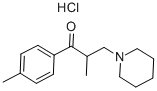
Tolperisone hydrochloride Properties
| Melting point | 181-183°C |
|---|
| storage temp. | room temp |
|---|
| solubility | H2O: >20mg/mL |
|---|
| form | solid |
|---|
| color | white |
|---|
| PH | pH(50g/l, 25℃) : 4.5~5.5 |
|---|
| Water Solubility | almost transparency |
|---|
| Merck | 14,9522 |
|---|
| CAS DataBase Reference | 3644-61-9(CAS DataBase Reference) |
|---|
| FDA UNII | 8Z075K2TIG |
|---|
AI Product Description
*The following content is generated by AI and is for reference only.
Tolperisone Hydrochloride is a centrally acting skeletal muscle relaxant widely utilized in clinical practice to alleviate symptoms associated with various neuromuscular disorders. Its chemical identity is defined by the molecular formula C19H28ClNO3, and it is uniquely identified by the CAS Registry Number 57-06-7. Structurally, this compound belongs to the class of aminopyridine derivatives, which distinguishes it from other muscle relaxants that primarily function through direct action on the muscle spindle or the motor endplate. Instead, Tolperisone exerts its therapeutic effects primarily within the central nervous system, specifically by inhibiting polysynaptic reflexes at the spinal cord level.
The primary clinical application of Tolperisone Hydrochloride involves the symptomatic treatment of increased muscle tone resulting from neurological conditions such as cerebral palsy, multiple sclerosis, stroke sequelae, and traumatic brain injuries. It is particularly effective in reducing pathological muscle spasms, stiffness, and pain associated with spasticity. Beyond its antispasmodic properties, the drug possesses mild local anesthetic activity due to its sodium channel blocking capabilities, which may contribute to its overall efficacy in managing pain arising from muscle tension. Unlike many sedative muscle relaxants, Tolperisone generally does not cause significant drowsiness or psychomotor impairment at therapeutic doses, allowing patients to maintain functional mobility during treatment.
Pharmacokinetically, Tolperisone is rapidly absorbed following oral administration and undergoes extensive hepatic metabolism. The hydrochloride salt form ensures adequate solubility and bioavailability for systemic distribution. While it is prescribed independently, it is often combined with non-steroidal anti-inflammatory drugs (NSAIDs) or analgesics to enhance therapeutic outcomes in acute musculoskeletal pain scenarios. Although generally well-tolerated, potential side effects can include gastrointestinal disturbances, hypotension, and allergic reactions. As a versatile agent in neurology and rehabilitation medicine, Tolperisone Hydrochloride remains a cornerstone therapy for restoring muscle function and improving the quality of life for patients suffering from chronic spasticity and related movement disorders worldwide.




 (All Rights Reserved)