Product Name: Tetramethyl ammonium sulphate
CAS number: 14190-16-0
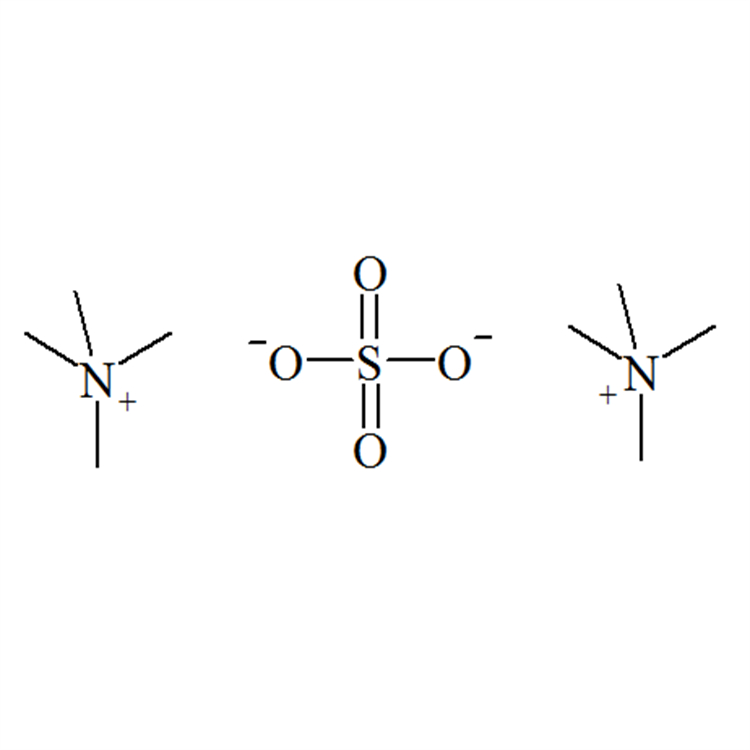
Molecular formula: C8H24N2SO4
Molecular weight: 244.3522
Purity (content): 95%
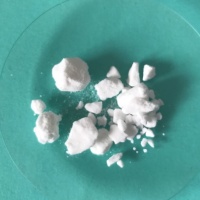
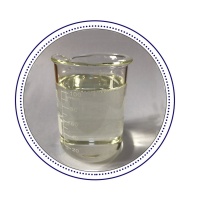
Property: Almost white solid.
Usage: Pharmaceutical intermediate, phase transfer catalyst
Caution: Easy to absorb water, should be sealed and stored dry.
*The following content is generated by AI and is for reference only.
Tetramethylammonium sulfate is a quaternary ammonium salt with the chemical formula C8H24NO4S. Its CAS registry number is 107-69-3. This compound appears as a white to off-white crystalline powder that is highly soluble in water, making it an ideal reagent for various electrochemical and analytical applications. The molecule consists of a central nitrogen atom bonded to four methyl groups and balanced by a sulfate anion, creating a stable cationic species known as the tetramethylammonium ion.
In the scientific community, tetramethylammonium sulfate is primarily utilized as a source of tetramethylammonium ions in chromatography, particularly in ion-exchange and high-performance liquid chromatography (HPLC). It serves as a mobile phase additive or eluent to separate anions effectively due to its non-interacting nature with many detection systems. Furthermore, it plays a critical role in electrophysiology research, where it acts as a potassium channel blocker or substitute to study membrane potentials and ion transport mechanisms without introducing interfering metal ions. The compound is also employed in the synthesis of organic materials and as a catalyst support in specific chemical reactions requiring a mild, non-nucleophilic cation.
Safety data indicates that while generally stable under standard conditions, handling requires standard laboratory precautions to avoid inhalation of dust or contact with skin and eyes. Storage should be conducted in a cool, dry place away from incompatible strong oxidizers. As a versatile tool in both academic research and industrial quality control, tetramethylammonium sulfate remains a staple reagent for chemists and biologists seeking precise control over ionic environments. Its predictable solubility and low toxicity profile compared to other heavy metal salts make it a preferred choice for sensitive biological assays and high-precision analytical separations across diverse fields including pharmaceutical development, environmental testing, and fundamental physical chemistry investigations.