Product Name: Tetraethyl ammonium fluoride trihydrate
CAS number: 665-46-3
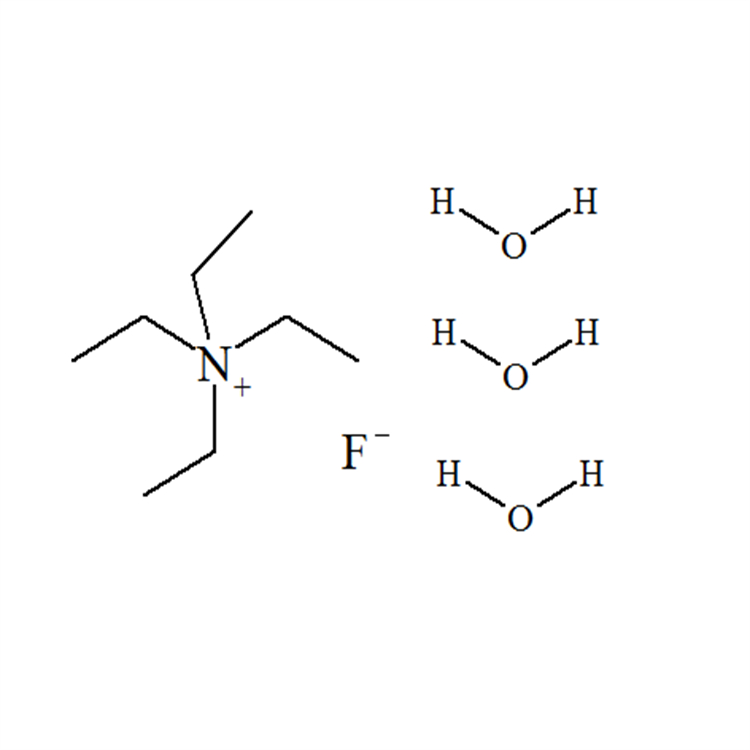
Molecular formula: C8H20NF·3H2O
Molecular weight: 239.28
Purity (content): 98%
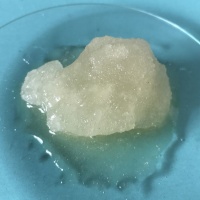
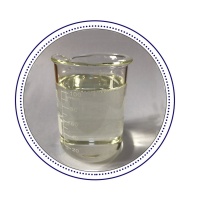
Property: White to light yellow solid that melts easily in hot weather.
Usage: This product can be used as a phase transfer catalyst.
Caution: Easy to absorb water and melt, should be sealed and stored dry.
*The following content is generated by AI and is for reference only.
Tetraethylammonium fluoride trihydrate is a specialized organofluorine salt widely utilized in advanced chemical synthesis and analytical applications. With the molecular formula C8H24FNO3 and the CAS Registry Number 1507-68-6, this compound represents a stable source of nucleophilic fluoride ions in organic reactions. The presence of three water molecules of hydration distinguishes it from its anhydrous counterparts, offering enhanced solubility in polar solvents while maintaining reactivity profiles suitable for delicate transformations.
The primary utility of tetraethylammonium fluoride trihydrate lies in its role as a demasking agent for silyl protecting groups. In complex molecule synthesis, particularly within pharmaceutical and natural product chemistry, silicon-based groups are frequently employed to protect hydroxyl functionalities during multi-step sequences. This reagent efficiently cleaves silyl ethers under mild conditions without affecting other sensitive functional groups, making it indispensable for late-stage deprotection strategies. Furthermore, it serves as a valuable fluorinating agent in the preparation of organofluorine compounds, which are critical components in modern agrochemicals and bioactive drugs due to their unique metabolic stability and lipophilicity.
Beyond synthetic applications, this salt finds use in electrochemistry and materials science, where controlled fluoride release is necessary for surface modification or electrolyte formulation. Its solid-state form facilitates accurate weighing and handling compared to gaseous or liquid fluoride sources, improving laboratory safety and reproducibility. Researchers favor this trihydrate form for its balance between reactivity and stability, allowing for precise stoichiometric control in reaction protocols. While alternative fluoride sources exist, tetraethylammonium fluoride trihydrate remains a benchmark reagent for selective desilylation and fluorination processes in both academic research and industrial manufacturing settings. Proper storage in a cool, dry environment is recommended to prevent degradation of the hydration state and ensure consistent performance across diverse experimental conditions.





 (All Rights Reserved)
![6,8-Dioxo-5,7-diazaspiro[3.4]octane-2-carboxylic acid](https://eimg.pharmasources.com/image/product/20250403/02effeb5a7639bc84ff1f3add3c0c64fjpg)
![8,16-Diazadispiro[6.1.6.2]heptadecan-17-one](https://eimg.pharmasources.com/image/product/20250403/ca91cba8b87e53fc879f8d8764873a40jpg)
![8-Oxa-1,3-diazaspiro[4.5]decane-2,4-dione](https://eimg.pharmasources.com/image/product/20250403/60fa7223d5a34f24138486ceea0ffb15jpg)