Product Name: Tetrabutylammonium Hexafluorophosphate
CAS number: 3109-63-5
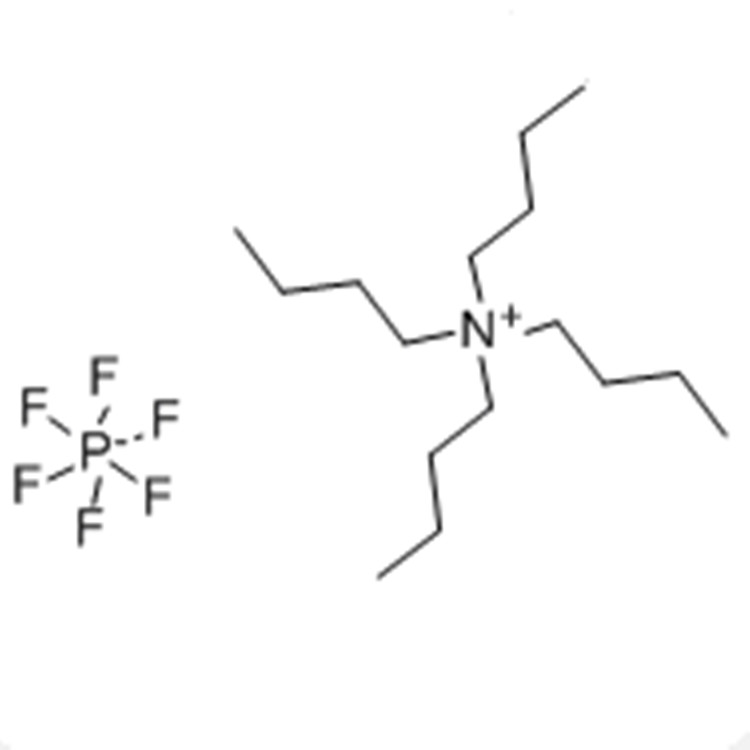
Molecular formula: C16H36F6NP
Molecular weight: 387.43
Purity (content): 98%
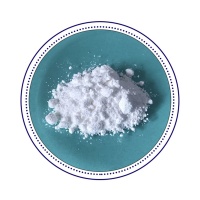
Property: White crystalline powder, irritating substance that irritates the eyes, respiratory system, and skin.
Usage: Phase transfer catalyst, etc.
Caution: Easy to absorb water, should be sealed and stored dry.
*The following content is generated by AI and is for reference only.
Tetrabutylammonium hexafluorophosphate, commonly abbreviated as TBAPF6 or Bu4NPF6, is a widely utilized quaternary ammonium salt in modern chemical synthesis and electrochemical research. With the molecular formula C16H36F6N P and a CAS registry number of 25970-28-1, this compound features a large organic cation paired with the hexafluorophosphate anion. The unique structure of TBAPF6 grants it exceptional solubility in a broad spectrum of polar aprotic organic solvents, including acetonitrile, dichloromethane, and dimethylformamide, while maintaining relative stability under ambient conditions.
The primary application of tetrabutylammonium hexafluorophosphate lies in its role as a supporting electrolyte for cyclic voltammetry and other electroanalytical techniques. Due to its high dissociation constant and wide electrochemical window, it facilitates efficient charge transport without undergoing oxidation or reduction within standard potential ranges. This property makes it indispensable for studying redox processes in organic molecules, conducting polymer synthesis, and characterizing battery materials. Furthermore, the tetra-n-butylammonium cation serves as a phase-transfer catalyst in various organic transformations, enabling reactions between aqueous and organic phases by shuttling anions into non-polar environments. It is also frequently employed in ion-exchange chromatography and as a source of lipophilic counter-ions in organometallic chemistry.
While generally stable, TBAPF6 must be handled with care, as exposure to strong acids can release toxic hydrogen fluoride gas. Its hygroscopic nature requires storage in a dry environment to prevent hydrolysis, which could compromise experimental results. As a versatile reagent, TBAPF6 bridges the gap between fundamental electrochemical theory and practical industrial applications, from lithium-ion battery development to advanced material science. Its reliability and predictable behavior have cemented its status as a standard reference material in laboratories worldwide, driving innovation in energy storage systems and synthetic methodologies. Researchers continue to rely on this salt for its consistent performance in complex reaction matrices, ensuring reproducible data across diverse scientific disciplines.





 (All Rights Reserved)






![8-Oxa-1,3-diazaspiro[4.5]decane-2,4-dione](https://eimg.pharmasources.com/image/product/20250403/60fa7223d5a34f24138486ceea0ffb15jpg)
![6,8-Dioxo-5,7-diazaspiro[3.4]octane-2-carboxylic acid](https://eimg.pharmasources.com/image/product/20250403/02effeb5a7639bc84ff1f3add3c0c64fjpg)

![8,16-Diazadispiro[6.1.6.2]heptadecan-17-one](https://eimg.pharmasources.com/image/product/20250403/ca91cba8b87e53fc879f8d8764873a40jpg)
