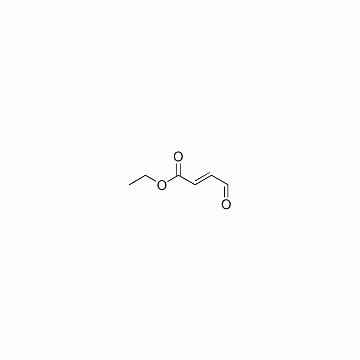
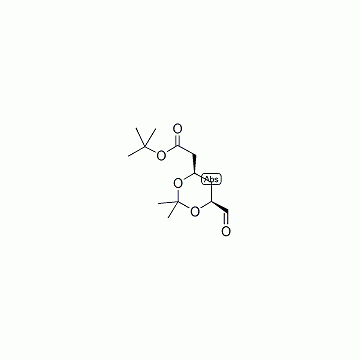
Product Description
Sucralfate;-fructofuranosylalpha-d-glucopyranosidetetrakis(hydrogensulfato)(8-)))hexade 54182-58-0
AI Product Description
*The following content is generated by AI and is for reference only.
Sucralfate is a complex sucrose sulfate ester with the systematic name sucroferric octasulfate, though its chemical structure is often described as a fructofuranosyl-alpha-D-glucopyranoside tetrakis(hydrogensulfato)(8-) complex. The specific string provided in your query appears to be a fragmented or slightly inaccurate representation of this highly sulfated carbohydrate derivative. In standard pharmaceutical contexts, Sucralfate does not possess a simple molecular formula like typical small molecules; rather, it is defined by its polymeric nature and high degree of sulfation, typically approximated around C12H14O35S8 for the core anhydrous unit, though exact stoichiometry varies based on the aluminum content and hydration state. Its CAS number is 60663-90-7.
This medication functions primarily as a cytoprotective agent used in the treatment of gastrointestinal ulcers, including duodenal and gastric ulcers, as well as gastroesophageal reflux disease (GERD). Unlike antacids that merely neutralize acid, Sucralfate operates through a unique mechanism involving local action within the acidic environment of the stomach. Upon contact with gastric acid, the drug dissociates to release a negatively charged polymer that binds selectively to positively charged proteins at the base of ulcer craters. This binding forms a stable, viscous barrier or "bandage" over the lesion, shielding it from further damage caused by pepsin, bile salts, and hydrochloric acid. Furthermore, this protective layer facilitates the absorption of bicarbonate and promotes mucosal healing by stimulating prostaglandin synthesis and increasing mucus production.
Clinically, Sucralfate is valued for its safety profile, particularly in patients who cannot tolerate systemic side effects associated with other ulcer therapies. It has minimal systemic absorption, making it suitable for long-term management in specific populations, such as pregnant women, although dosage adjustments are always recommended under medical supervision. Common side effects are generally mild and may include constipation or dry mouth. While it is effective for acute healing phases, it is often prescribed alongside lifestyle modifications and dietary changes to ensure comprehensive recovery. Due to its localized mode of action, it does not significantly alter gastric pH, distinguishing it from proton pump inhibitors or H2 blockers. Consequently, Sucralfate remains a cornerstone therapy in gastroenterology for promoting rapid epithelial regeneration and preventing recurrence in chronic ulcerative conditions.

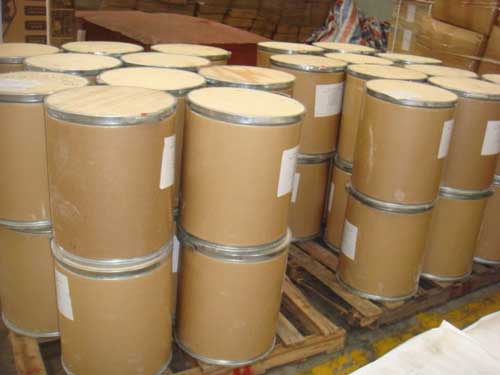




 (All Rights Reserved)



![(3R)-3-Amino-1-[3-(Trifluoromethyl)-5,6,7,8-Tetrahydro-1,2,4-Triazolo[4,3-A]Pyrazin-7-yl]-4-(2,4,5-T](https://eimg.pharmasources.com/image/product/20250402/e43f5153f3b91f760fdee40247460568jpg)

![3-(Trifluoromethyl)-5,6,7,8-Tetrahydro-[1,2,4]Triazolo[4,3-a]Pyrazine HCL](https://eimg.pharmasources.com/image/product/20250402/8ae4dd18f1fe219e41ad63ce9b3306d7jpg)

![4-[[[[6-[(Diethylamino)methyl]-2-naphthalenylmethoxy]carbonyllaminolbenzoic acid](https://eimg.pharmasources.com/image/20241206/xJCFsdgfMrHzqjtgeOixhGQHgVbKi7kAcoEqemzE.jpg)