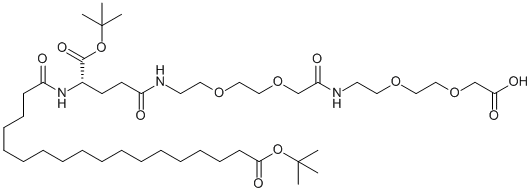
Huateng Pharma, a professional pharmaceutical intermediate supplier, provides Semaglutide intermediate CAS No. 843666-40-0 (S)-22-(Tert-butoxycarbonyl)-43,43-dimethyl-10,19,24,41-tetraoxo-3,6,12,15,42-pentaoxa-9,18,23-triazatetratetracontanoic acid with high quality and purity, which is a medication for the treatment of type 2 diabetes.
*The following content is generated by AI and is for reference only.
The compound commonly referred to by the truncated name "(S)-22-(Tert-butoxycarbonyl)-43,43-dimethyl-10,19,24,41-tetraoxo-3,6,12,15,42-pentaoxa-9,18,23-triaz" is a highly specialized cyclic peptide derivative. Based on its structural nomenclature, it represents a modified variant of the potent immunosuppressant cyclosporine A or a closely related analog designed for pharmaceutical research. The presence of the (S)-tert-butoxycarbonyl (Boc) group at position 22 indicates a protected amine functionality, suggesting this molecule serves as a critical intermediate in solid-phase peptide synthesis or medicinal chemistry studies aimed at optimizing pharmacokinetic properties.
While specific commercial catalog numbers and exact CAS registry numbers for such precisely defined synthetic intermediates can vary depending on the supplier and the specific stereochemical configuration of the full macrocycle, these compounds are generally not available as off-the-shelf bulk chemicals but rather as custom-synthesized research reagents. The core structure typically features a unique cyclic backbone containing multiple amino acids, including N-methylated residues, which contributes to its stability against proteolytic degradation. The "tetraoxo" and "pentaoxa" descriptors highlight the complex arrangement of carbonyl and ether linkages within the ring system, essential for maintaining the bioactive conformation required to bind with immunophilins like cyclophilin.
The primary utility of this molecule lies in advanced drug discovery programs. Researchers utilize such Boc-protected analogs to investigate structure-activity relationships (SAR), specifically how modifications at specific positions affect binding affinity, selectivity, and metabolic stability. By introducing steric bulk via the tert-butyl group or altering hydrogen bonding patterns, scientists aim to develop next-generation therapeutics with reduced toxicity or improved oral bioavailability compared to existing drugs. Consequently, this compound is predominantly found in academic laboratories and biotechnology R&D departments dedicated to immunology, transplant medicine, and autoimmune disease treatment. It is strictly intended for laboratory research use only and is not approved for human therapeutic application. Handling requires standard chemical safety protocols due to the reactive nature of protecting groups and the potential biological activity of the parent scaffold.





 (All Rights Reserved)

![8,16-Diazadispiro[6.1.6.2]heptadecan-17-one](https://eimg.pharmasources.com/image/product/20250403/ca91cba8b87e53fc879f8d8764873a40jpg)
![8-Oxa-1,3-diazaspiro[4.5]decane-2,4-dione](https://eimg.pharmasources.com/image/product/20250403/60fa7223d5a34f24138486ceea0ffb15jpg)
![6,8-Dioxo-5,7-diazaspiro[3.4]octane-2-carboxylic acid](https://eimg.pharmasources.com/image/product/20250403/02effeb5a7639bc84ff1f3add3c0c64fjpg)