Brief Introduction
Rutin is found in many plants, fruits and vegetables. The richest source is buckwheat. Rutin is also found in citrus fruits, noni, black tea, apple peel. During digestion much of the rutin is metabolized to its aglycone, quercetin
Detailed Product Description
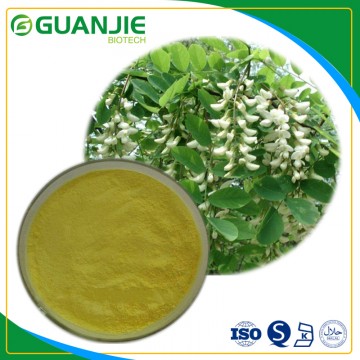
- Product name: Fructus sophorae P.E.
- Active ingredient: Rutin
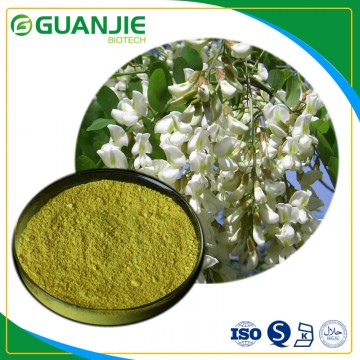
- Botanical source: Sophora japonica L
- Biogenic origin: Wild in central and southern China
- CAS NO.: 153-18-4
- Specification:98%
- Molecular formula: C27H30O16
- Molecular Weight:610.51
- Characters: Light Yellow or White Powder
- Test Method: HPLC
- Part Used: Bud
- Usage: Pharmaceuticals, healthcares, and cosmetics
Main Functions
- Rutin inhibits platelet aggregation, as well as decreases capillary permeability, making the blood thinner and improving circulation.
- Rutin shows anti-inflammatory activity in some animal and in vitro models.
- Rutin inhibits aldose reductase activity. Aldose reductase is an enzyme normally present in the eye and elsewhere in the body. It helps change glucose into the sugar alcohol sorbitol.
- Recent studies show rutin could help prevent blood clots, so could be used to treat patients at risk of heart attacks and strokes.
- Some evidence also shows rutin can be used to treat hemorrhoids, varicosis, and microangiopathy.
- Rutin is also an antioxidant; compared to quercetin, acacetin, morin, hispidulin, hesperidin, and naringin, it was found to be the strongest
Packing &Storage Condition
Storage: Store in cool & dry place, Keep away from strong light and heat.
Shelf life: 24Months when properly stored.
Packing: 25/kg paper drum and two plastic-bags inside