Product Description
Rosemary acid is a natural antioxidant, has strong antioxidant activity, helps to prevent cell damage caused by free radicals, thereby reducing the risk of cancer and atherosclerosis.
Rosemary acid has strong anti-inflammatory activity, and rosemary acid also has antibacterial, antiviral, antitumor activity.
Rosemary acid in pharmaceutical, food, cosmetics and other fields has showed its important application value.
AI Product Description
*The following content is generated by AI and is for reference only.
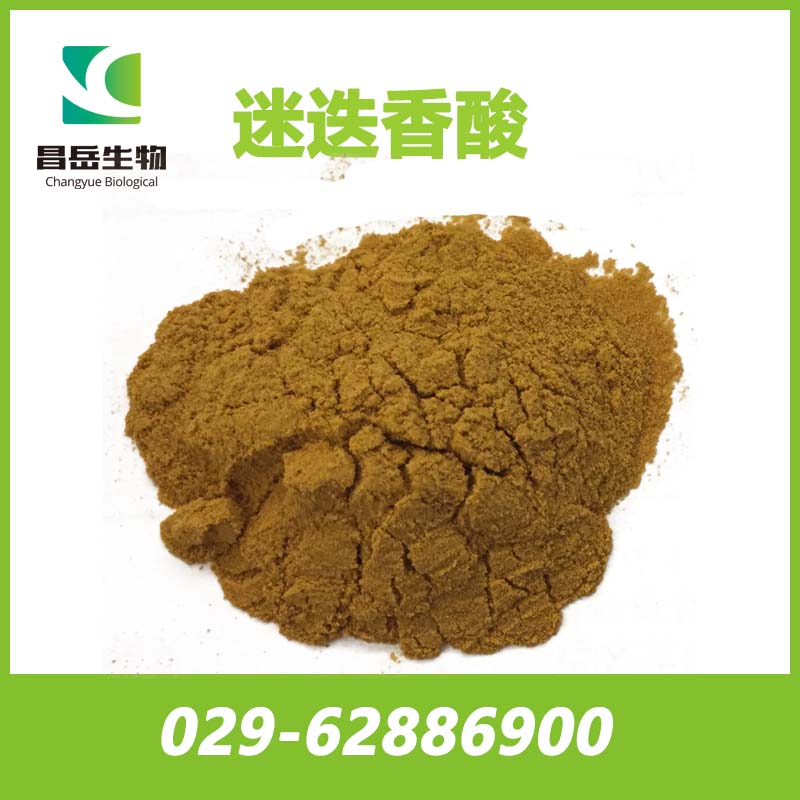
Rosmarinic acid, commonly abbreviated as RosA, is a naturally occurring polyphenolic compound widely distributed in the Lamiaceae family of plants, including rosemary, sage, and basil. Its molecular formula is C18H16O8, reflecting its complex structure composed of caffeic acid and 3,4-dihydroxyphenyllactic acid moieties linked by an ester bond. The substance is identified by the CAS number 20283-92-5 and typically appears as a yellowish to pale brown amorphous powder or crystalline solid. Renowned for its potent antioxidant properties, RosA effectively scavenges free radicals and chelates metal ions, thereby protecting cells from oxidative stress. Beyond its role in food preservation, it exhibits significant anti-inflammatory, antimicrobial, and antiviral activities, making it a valuable ingredient in pharmaceutical research and cosmetic formulations. In the medical field, studies suggest potential benefits in managing neurodegenerative disorders, allergies, and metabolic syndromes due to its ability to modulate inflammatory pathways and inhibit specific enzymes like cyclooxygenase. Furthermore, its safety profile allows for incorporation into dietary supplements, functional foods, and skincare products aimed at skin rejuvenation and protection against UV-induced damage. As consumer demand shifts toward natural and plant-based solutions, Rosmarinic acid has gained prominence as a versatile bioactive agent bridging traditional herbal medicine with modern therapeutic applications. Its stability under various processing conditions further enhances its utility across diverse industries. Researchers continue to explore its mechanisms of action and potential synergistic effects when combined with other phytochemicals. Overall, RosA represents a promising candidate for developing next-generation health products that prioritize efficacy, safety, and sustainability, aligning with global trends in preventive healthcare and clean-label manufacturing.




 (All Rights Reserved)