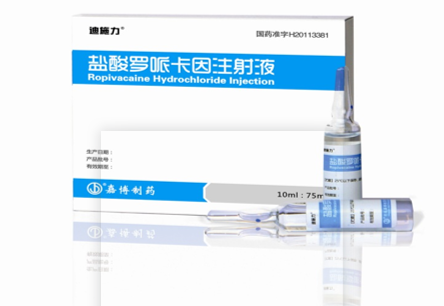
First domestic ropivacaine approved for use in lumbar anesthesia
➢It has the characterstics of obvious separation of static and static, quick recovery of motor function and low incidence of adverse reactions.
➢Pass the consistency evaluation by NMPA
Strength: 10ml : 75mg ; 10ml : 100mg
*The following content is generated by AI and is for reference only.
Ropivacaine Hydrochloride Injection is a long-acting amide local anesthetic widely utilized in clinical practice for sensory and motor blockade. Primarily indicated for surgical anesthesia, it serves as an effective agent for spinal, epidural, and peripheral nerve blocks across various procedures, including cesarean sections, orthopedic surgeries, and diagnostic interventions. Its unique pharmacological profile distinguishes it from other agents like bupivacaine by offering a high degree of sensory-motor dissociation. This means it can provide profound pain relief while minimizing muscle weakness, facilitating faster post-operative recovery and early mobilization for patients. Additionally, it is frequently employed in continuous infusion catheters for post-surgical pain management and acute or chronic pain control in non-surgical settings.
The drug functions by reversibly blocking sodium channels in neuronal membranes, thereby inhibiting the initiation and conduction of nerve impulses. A significant advantage of ropivacaine is its reduced cardiotoxicity compared to racemic bupivacaine, making it a preferred choice for large-volume infiltrations and continuous infusions where safety margins are critical. However, strict adherence to dosing guidelines is essential to prevent systemic toxicity, which may manifest as central nervous system symptoms such as dizziness, tinnitus, or seizures, and cardiovascular effects like hypotension or arrhythmias. Special caution is required when administering this medication to patients with severe heart block, uncontrolled hypertension, or known hypersensitivity to amide-type anesthetics. It should be used with extreme care in elderly patients, those with hepatic impairment, or during pregnancy, as these factors can alter drug metabolism and increase adverse reaction risks. Furthermore, because the solution contains no preservatives in many formulations, it must be used immediately after opening to ensure sterility. Healthcare providers must always have resuscitation equipment and emergency medications readily available during administration to manage potential anaphylactic reactions or accidental intravascular injection. Proper technique and aspiration before injection are mandatory to minimize the risk of nerve damage or systemic absorption.



 (All Rights Reserved)