Product Description
AI Product Description
*The following content is generated by AI and is for reference only.
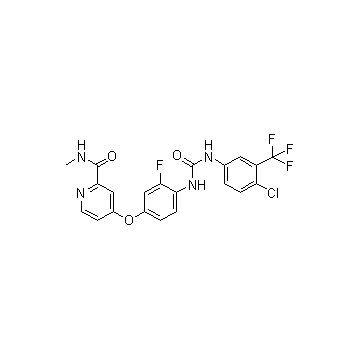
Regorafenib, commercially known by the brand name Stivarga, is a potent oral multikinase inhibitor utilized primarily in the treatment of advanced malignancies. Its chemical identity is defined by the molecular formula C27H18ClF3N6O4S and the CAS Registry Number 870539-09-0. Structurally, it features a complex arrangement incorporating chloro, fluoro, and sulfur atoms, which are critical for its high-affinity binding to specific kinase domains.
The primary clinical indication for Regorafenib involves patients with metastatic colorectal cancer who have progressed on standard therapies, including fluoropyrimidine-, oxaliplatin-, and irinotecan-based chemotherapy, as well as anti-VEGF agents. Furthermore, it is approved for the treatment of gastrointestinal stromal tumors (GIST) refractory to prior imatinib and sunitinib therapy, and for patients with well-differentiated neuroendocrine tumors of pancreatic origin that have progressed following prior treatment. The drug functions by inhibiting a broad spectrum of receptor tyrosine kinases involved in tumor angiogenesis, oncogenesis, and the tumor microenvironment. Key targets include VEGFR1-3, FGFR1-4, PDGFRβ, RET, KIT, RAF-1, BRAF, and TIE2. By blocking these signaling pathways, Regorafenib effectively disrupts blood vessel formation within the tumor, thereby starving the cancer cells of essential nutrients and oxygen while simultaneously inhibiting direct tumor cell proliferation.
Administration typically occurs once daily for twenty-one consecutive days followed by a seven-day rest period within a 28-day cycle. Common adverse events include fatigue, hand-foot skin reaction, hypertension, diarrhea, and liver function abnormalities, necessitating careful monitoring during treatment. Despite significant toxicity management challenges, Regorafenib represents a crucial therapeutic option for patients with limited alternatives in advanced solid tumors, offering a mechanism that targets multiple drivers of disease progression simultaneously to extend survival outcomes.



 (All Rights Reserved)