Product Description
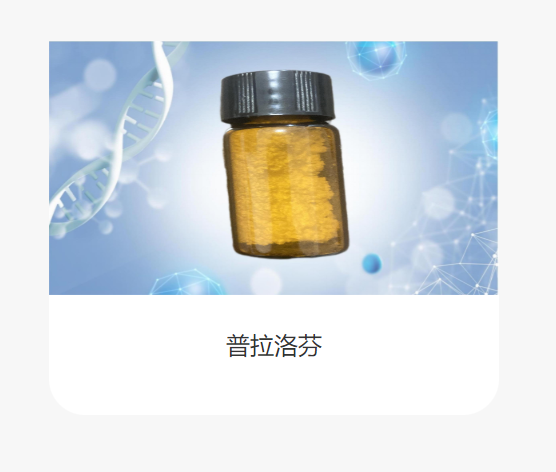
普拉洛芬化学性质熔点:182-183°沸点:398.5°C(roughestimate)密度:1.1654(roughestimate)折射率:1.5500(estimate)储存条件:2-8°C溶解度:DMSO(SlightlChemicalbooky),Methanol(Slightly)酸度系数(pKa):4.27±0.10(Predicted)形态:powder颜色:whitetobeigeCAS数据库:52549-17-4(CASDataBaseReference)
AI Product Description
*The following content is generated by AI and is for reference only.
Pranoprofen, chemically known as (±)-2-(4-isopropylphenyl)propionic acid or its derivatives, is a non-steroidal anti-inflammatory drug (NSAID) belonging to the propionic acid class. Its molecular formula is C13H18O2, and it carries the CAS Registry Number 60749-54-4. This compound functions primarily as a potent inhibitor of cyclooxygenase (COX) enzymes, specifically blocking both COX-1 and COX-2 isoforms. By inhibiting these enzymes, Pranoprofen effectively reduces the synthesis of prostaglandins, which are key mediators of inflammation, pain, and fever in the human body.
Clinically, Pranoprofen is widely utilized for the management of mild to moderate pain and inflammatory conditions. It is particularly renowned for its application in ophthalmology, where topical formulations are prescribed to treat ocular inflammation following cataract surgery or other intraocular procedures. The drug helps alleviate post-operative pain, reduce corneal edema, and prevent miosis. Beyond eye care, systemic administration has been explored for treating musculoskeletal disorders, including arthritis, tendonitis, and soft tissue injuries. Its rapid onset of action and high bioavailability make it a preferred choice in specific therapeutic contexts, especially within Japan and parts of Asia, where it has been extensively studied and approved.
Pharmacokinetically, Pranoprofen is well-absorbed after oral administration, with peak plasma concentrations reached within one to two hours. It undergoes extensive metabolism in the liver, primarily via oxidation and conjugation, before being excreted mainly through the kidneys. While generally well-tolerated, like other NSAIDs, it may cause gastrointestinal disturbances such as nausea, dyspepsia, or abdominal pain in some patients. Rare but serious side effects include gastric ulcers and renal impairment, necessitating cautious use in elderly patients or those with pre-existing kidney or stomach issues. Despite these risks, Pranoprofen remains a valuable tool in modern pharmacotherapy due to its efficacy profile and versatility in treating various inflammatory states, offering significant relief to patients suffering from acute and chronic pain conditions.



![8-Oxa-1,3-diazaspiro[4.5]decane-2,4-dione](https://eimg.pharmasources.com/image/product/20250403/60fa7223d5a34f24138486ceea0ffb15jpg)
![8,16-Diazadispiro[6.1.6.2]heptadecan-17-one](https://eimg.pharmasources.com/image/product/20250403/ca91cba8b87e53fc879f8d8764873a40jpg)
![6,8-Dioxo-5,7-diazaspiro[3.4]octane-2-carboxylic acid](https://eimg.pharmasources.com/image/product/20250403/02effeb5a7639bc84ff1f3add3c0c64fjpg)



 (All Rights Reserved)