DMF
Its antibacterial spectrum and clinical application are similar to polymyxins E, and it has inhibitory or bactericidal effect on gram-negative bacilli, such as Escherichia coli, Pseudomonas aeruginosa, Parainescherichia coli, Klebsiella pneumoniae, Acidophilus, Pertussis and Dysentery bacilli.
*The following content is generated by AI and is for reference only.
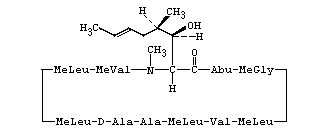
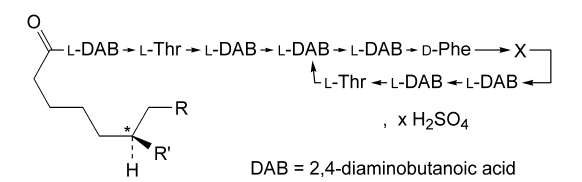
Polymyxin B Sulfate is a potent polypeptide antibiotic belonging to the polymyxin class, primarily derived from the bacterium *Paenibacillus polymyxa*. Its chemical identity is defined by the CAS number 1405-88-9. The molecular formula is typically represented as (C63H117N21O14)2·xH2SO4, reflecting its complex structure composed of two peptide chains linked to a fatty acid tail, forming a cationic detergent-like molecule that interacts aggressively with bacterial membranes.
This agent serves as a critical therapeutic tool against multidrug-resistant Gram-negative bacteria, particularly strains of *Pseudomonas aeruginosa*, *Escherichia coli*, and *Klebsiella pneumoniae* that exhibit resistance to other common antibiotics like carbapenems or cephalosporins. Due to its mechanism of action, which involves displacing divalent cations in the outer membrane and causing rapid depolarization and cell lysis, Polymyxin B Sulfate is often reserved for severe, life-threatening infections where no safer alternatives exist. It is frequently administered intravenously for systemic infections or topically for localized conditions such as burn wounds, eye infections, or otitis externa, although topical formulations are more common to minimize systemic toxicity risks.
Despite its efficacy, the clinical use of Polymyxin B Sulfate is limited by significant nephrotoxicity and neurotoxicity. Consequently, it requires careful dose monitoring and is generally avoided in patients with pre-existing renal impairment unless absolutely necessary. In recent years, as antibiotic resistance continues to escalate globally, this drug has regained prominence as a "last-resort" therapy in hospital settings. Beyond human medicine, it is also utilized in research laboratories as a selective agent to isolate specific mutant strains or in the preparation of endotoxin-free reagents due to its ability to neutralize lipopolysaccharides found in Gram-negative cell walls. While newer analogs like Colistin are available, Polymyxin B remains a cornerstone in antimicrobial stewardship programs fighting resistant pathogens.





 (All Rights Reserved)