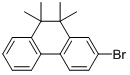
Phenanthrene, 2-bromo-9,10-dihydro-9,9,10,10-tetramethyl-
OLED intermediate, intermediates, 2626929-23-3
We specialize in the production of this type of intermediates and can customize them according to customers' specified specifications.
*The following content is generated by AI and is for reference only.
2-Bromo-9,10-dihydro-9,9,10,10-tetramethylphenanthrene is a specialized organic compound characterized by a rigid polycyclic aromatic framework with significant steric bulk. Its chemical structure consists of a phenanthrene core where positions 9 and 10 are saturated, bearing two geminal dimethyl groups on each carbon, creating a highly crowded environment. A single bromine atom is substituted at the second position of the aromatic ring system. The molecular formula for this substance is C18H19Br, and it is identified by the CAS Registry Number 64583-95-7. This specific molecule serves as a critical intermediate in advanced materials science and medicinal chemistry research. Due to its unique steric hindrance and electronic properties, it is frequently employed as a building block in the synthesis of complex organic architectures, including luminescent materials, organic light-emitting diodes (OLEDs), and specialized ligands for transition metal catalysis. The bulky tetramethyl substitution pattern stabilizes reactive intermediates and influences the conformational dynamics of the resulting derivatives, making it invaluable for designing molecules with specific photophysical characteristics. Furthermore, the presence of the bromine atom provides a versatile handle for cross-coupling reactions, such as Suzuki-Miyaura or Buchwald-Hartwig couplings, allowing chemists to attach diverse functional groups efficiently. Researchers utilize this compound to explore structure-property relationships in pi-conjugated systems, aiming to enhance thermal stability and solubility in organic semiconductors. While not a commodity chemical, it holds substantial value in academic laboratories and high-tech manufacturing sectors focused on next-generation electronics and pharmaceutical agents. Safety protocols must be strictly observed during handling, as halogenated organic compounds can exhibit toxicity and environmental persistence. Proper storage in cool, dry conditions away from incompatible substances is essential to maintain purity and prevent degradation. Overall, 2-bromo-9,10-dihydro-9,9,10,10-tetramethylphenanthrene represents a sophisticated tool for chemists seeking to push the boundaries of molecular design in functional materials.





 (All Rights Reserved)






![Diethyl-2-acetamido-2-(7-chloro-5-(2-fluorophenyl)-3H- benzo[e][1,4]diazepin-2-yl)malonate](https://eimg.pharmasources.com/image/20240603/kCK1tVKXvO7mdpLTBNii5x61NUulXBiqHBf6clcn.png)