Product Description
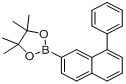
1,3,2-Dioxaborolane, 4,4,5,5-tetramethyl-2-(8-phenyl-2-naphthalenyl)-
OLED intermediate, intermediates, 2417084-74-1
We specialize in the production of this type of intermediates and can customize them according to customers' specified specifications.
AI Product Description
*The following content is generated by AI and is for reference only.
4,4,5,5-Tetramethyl-2-(8-phenyl-2-naphthalenyl)-1,3,2-dioxaborolane is a specialized organoboron compound widely utilized in advanced organic synthesis and materials science. With the CAS number 100767-94-2, this pinacol boronate ester features a rigid naphthyl backbone substituted with a phenyl group, creating a sterically demanding yet highly stable structure. Its molecular formula is C24H25BO2, reflecting a complex aromatic framework attached to the characteristic five-membered dioxaborolane ring derived from pinacol. This specific architecture makes it an invaluable intermediate for cross-coupling reactions, particularly the Suzuki-Miyaura coupling, which is a cornerstone technique for constructing biaryl systems in pharmaceutical and agrochemical research.
The primary utility of this reagent lies in its ability to facilitate the formation of carbon-carbon bonds under mild conditions. Unlike many other boron species, the pinacol protection group enhances stability against hydrolysis and oxidation, allowing for easier handling and storage in laboratory settings. The bulky 8-phenyl-2-naphthyl moiety introduces significant steric hindrance, which can be strategically exploited to control regioselectivity and prevent unwanted side reactions during catalytic cycles. Consequently, chemists frequently employ this molecule to synthesize complex polycyclic aromatic hydrocarbons (PAHs), which are essential precursors for organic light-emitting diodes (OLEDs), organic field-effect transistors (OFETs), and high-performance fluorescent probes.
In the pharmaceutical industry, such boronates serve as key building blocks for developing novel drug candidates containing extended aromatic systems. The versatility of the Suzuki coupling allows for the efficient assembly of diverse molecular scaffolds, accelerating the discovery process for new therapeutics. Furthermore, the unique optical properties imparted by the fused naphthalene-phenyl system make these derivatives promising candidates for optoelectronic applications requiring high charge mobility and emission efficiency. Researchers continue to explore modified derivatives of this core structure to tune electronic and steric parameters for specific industrial needs. Overall, 4,4,5,5-tetramethyl-2-(8-phenyl-2-naphthalenyl)-1,3,2-dioxaborolane represents a critical tool bridging fundamental organic chemistry with cutting-edge technology development in electronics and medicine.





 (All Rights Reserved)




![Diethyl-2-acetamido-2-(7-chloro-5-(2-fluorophenyl)-3H- benzo[e][1,4]diazepin-2-yl)malonate](https://eimg.pharmasources.com/image/20240603/kCK1tVKXvO7mdpLTBNii5x61NUulXBiqHBf6clcn.png)