Product Description
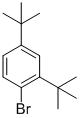
Benzene, 1-bromo-2,4-bis(1,1-dimethylethyl)-
OLED intermediate, intermediates, 80438-66-0
We specialize in the production of this type of intermediates and can customize them according to customers' specified specifications.
AI Product Description
*The following content is generated by AI and is for reference only.
Benzene, 1-bromo-2,4-bis(1,1-dimethylethyl)- is a specialized organic halogenated compound widely recognized in chemical synthesis and industrial applications. Its systematic name reflects a benzene ring substituted with one bromine atom at the first position and two tert-butyl groups at the second and fourth positions. The molecular formula for this substance is C12H17Br, indicating a carbon backbone of twelve atoms, seventeen hydrogen atoms, and a single bromine atom which defines its reactivity profile. The corresponding CAS registry number is 39689-50-8, serving as a unique identifier for tracking, safety data sheets, and regulatory compliance across global supply chains.
This compound primarily functions as an intermediate in the production of complex organic molecules, particularly within the pharmaceutical and agrochemical sectors. The presence of bulky tert-butyl groups provides significant steric hindrance, which can be strategically exploited to direct regioselectivity in subsequent electrophilic aromatic substitution reactions or to protect specific sites during multi-step synthesis. Furthermore, the bromine atom acts as a versatile leaving group, facilitating cross-coupling reactions such as Suzuki-Miyaura, Heck, or Negishi couplings. These transformations are essential for constructing biaryl structures found in active pharmaceutical ingredients (APIs) and advanced materials.
In terms of physical properties, Benzene, 1-bromo-2,4-bis(1,1-dimethylethyl)- typically appears as a colorless to pale yellow liquid or low-melting solid, depending on purity and temperature conditions. It exhibits moderate solubility in common organic solvents like dichloromethane, ethanol, and ether but remains largely insoluble in water due to its hydrophobic nature. Handling requires strict adherence to safety protocols, as it contains both a volatile aromatic core and a reactive halide. Storage should occur in cool, dry environments away from strong oxidizing agents and bases to prevent decomposition or hazardous side reactions. While not a commodity chemical, its niche utility makes it indispensable for research laboratories developing novel catalysts, polymers, and bioactive compounds where precise structural control is paramount. Researchers must consult Material Safety Data Sheets (MSDS) before use to ensure proper personal protective equipment and waste disposal procedures are followed.





 (All Rights Reserved)





![Diethyl-2-acetamido-2-(7-chloro-5-(2-fluorophenyl)-3H- benzo[e][1,4]diazepin-2-yl)malonate](https://eimg.pharmasources.com/image/20240603/kCK1tVKXvO7mdpLTBNii5x61NUulXBiqHBf6clcn.png)