Product Description
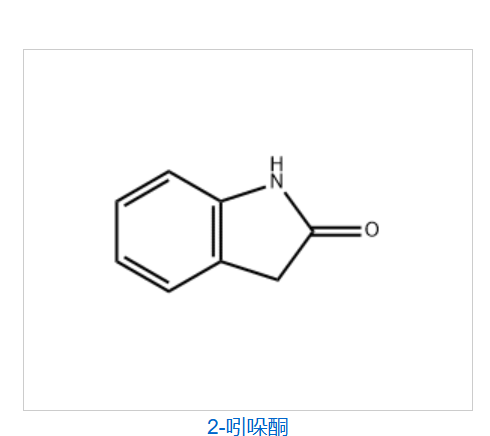
2-吲哚酮化学性质熔点:123-128°C(lit.)沸点:227°C73mmHg(lit.)密度:1.1475(roughestimate)折射率:1.5282(estimate)闪点:194-196°C/17mm储存条件:Sealedindry,RoomTemperature溶解度:9.1g/l酸度系数(pKa):14.77±0Chemicalbook.20(Predicted)形态:Solid颜色:LightBrown水溶解性:insolubleBRN:114692CAS数据库:59-48-3(CASDataBaseReference)NIST化学物质信息:2H-Indol-2-one,1,3-dihydro-(59-48-3)EPA化学物质信息:Oxindol(59-48-3)
AI Product Description
*The following content is generated by AI and is for reference only.
Oxindole, chemically known as 2,3-dihydro-1H-indol-2-one, is a privileged heterocyclic scaffold widely recognized in medicinal chemistry and pharmaceutical research. With the molecular formula C8H7NO and a CAS registry number of 485-96-9, this compound serves as a fundamental building block for synthesizing diverse bioactive molecules. Structurally, it consists of a benzene ring fused to a five-membered lactam ring, featuring an amide functionality that contributes significantly to its hydrogen-bonding capabilities and metabolic stability.
The primary application of oxindole derivatives lies in their potent biological activities, making them essential targets for drug discovery. Numerous studies have demonstrated that modified oxindole structures exhibit remarkable efficacy against various diseases, including cancer, HIV, inflammation, and bacterial infections. For instance, specific analogs function as selective inhibitors of protein kinases, such as glycogen synthase kinase-3 beta (GSK-3β), which are crucial in signaling pathways associated with neurodegenerative disorders and tumor growth. Furthermore, certain oxindole-based compounds act as antagonists for dopamine receptors or serotonin transporters, highlighting their potential in treating psychiatric conditions.
Beyond pharmaceuticals, oxindole is utilized in the development of advanced materials and agrochemicals. Its ability to form stable complexes with metal ions allows researchers to explore applications in catalysis and sensor technology. In agriculture, derivatives show promise as fungicides and herbicides due to their interaction with plant enzyme systems. The versatility of the oxindole core stems from its ease of functionalization at positions 3, 5, and 7, enabling chemists to fine-tune physicochemical properties for optimal therapeutic outcomes. Despite being a simple molecule, its structural simplicity belies its complexity in generating high-value pharmacophores. As global demand for novel therapeutics grows, oxindole remains a cornerstone in the design of next-generation drugs, bridging the gap between synthetic organic chemistry and clinical medicine. Its continuous exploration ensures its enduring relevance in advancing human health and scientific innovation across multiple disciplines.


![8,16-Diazadispiro[6.1.6.2]heptadecan-17-one](https://eimg.pharmasources.com/image/product/20250403/ca91cba8b87e53fc879f8d8764873a40jpg)
![8-Oxa-1,3-diazaspiro[4.5]decane-2,4-dione](https://eimg.pharmasources.com/image/product/20250403/60fa7223d5a34f24138486ceea0ffb15jpg)
![6,8-Dioxo-5,7-diazaspiro[3.4]octane-2-carboxylic acid](https://eimg.pharmasources.com/image/product/20250403/02effeb5a7639bc84ff1f3add3c0c64fjpg)



 (All Rights Reserved)