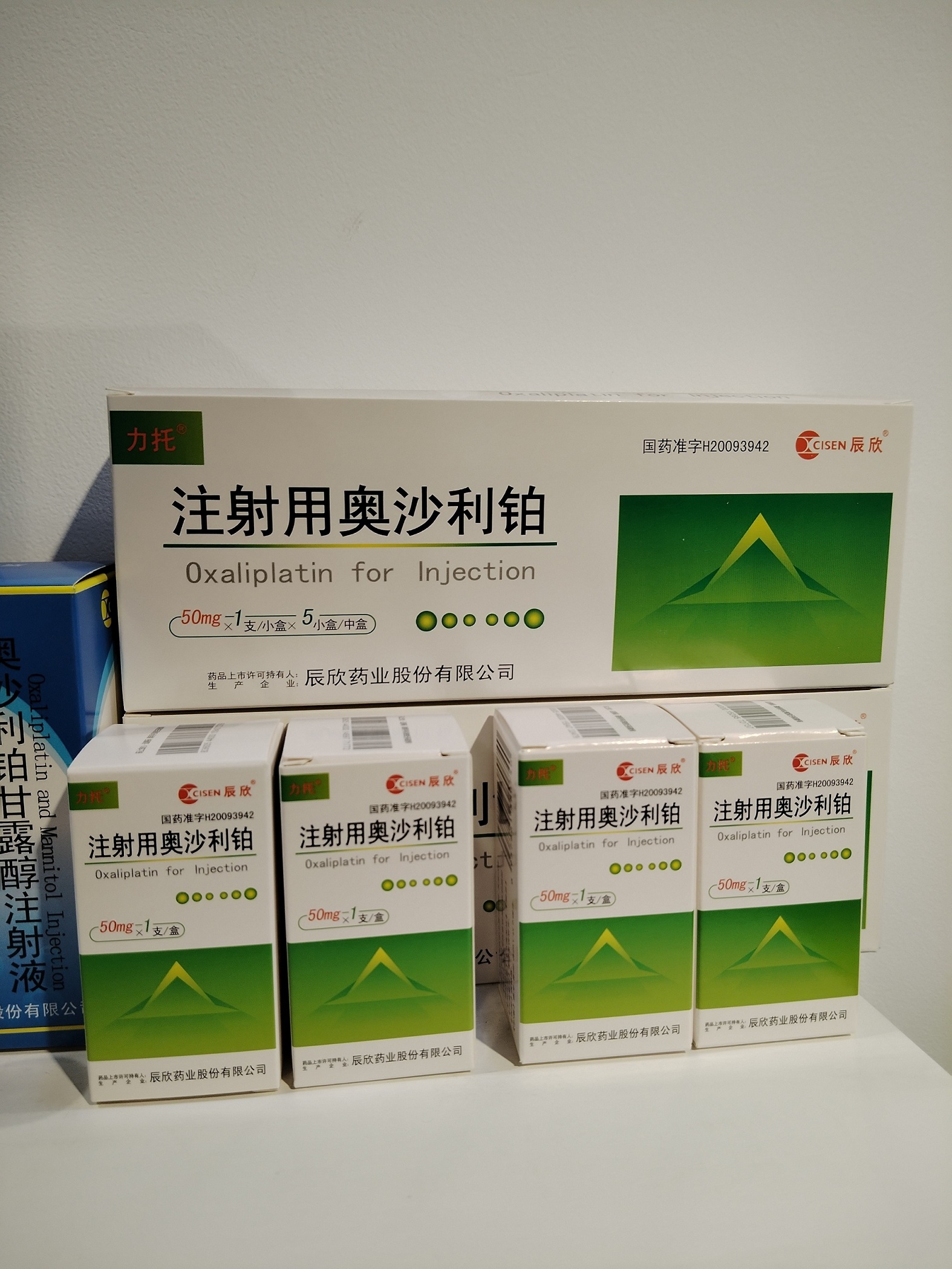
Product Description
This product is mainly used for the first and second line treatment of advanced colorectal cancer and early postoperative adjuvant chemotherapy; It is effective against ovarian cancer, breast cancer, stomach cancer, pancreatic cancer, non-small cell lung cancer, melanoma, testicular tumor and lymphoma
Specification: 50mg
AI Product Description
*The following content is generated by AI and is for reference only.
Oxaliplatin for Injection is a potent platinum-based antineoplastic agent primarily utilized in the treatment of colorectal cancer. It functions as an alkylating-like agent, forming DNA cross-links that inhibit DNA synthesis and repair, ultimately triggering apoptosis in rapidly dividing tumor cells. This medication is most commonly prescribed as part of combination chemotherapy regimens, such as FOLFOX (5-fluorouracil, leucovorin, and oxaliplatin) or CAPOX (capecitabine and oxaliplatin), for both metastatic disease and adjuvant therapy following surgical resection to reduce recurrence risks.
Administration requires strict adherence to protocols due to its specific toxicity profile. Oxaliplatin must be diluted in 5% dextrose solution; it is incompatible with saline or other chloride-containing fluids, which can precipitate the drug and cause severe infusion reactions. A critical safety consideration is acute neurotoxicity, manifesting as cold-induced paresthesia, throat tightness, or dysphagia. Patients are strictly advised to avoid exposure to cold temperatures, including drinking cold liquids or handling cold objects, during and shortly after infusion. Chronic cumulative neuropathy may also develop, potentially affecting fine motor skills and sensation in the extremities.
Hematologic toxicities, including neutropenia, thrombocytopenia, and anemia, are common and necessitate regular blood count monitoring. Hepatotoxicity, though rare, can occur, requiring periodic liver function tests. Anaphylactic reactions are possible but less frequent compared to other platinum agents; immediate medical intervention is required if signs of hypersensitivity arise. The drug is contraindicated in patients with known severe hypersensitivity to oxaliplatin or other platinum compounds. Due to its teratogenic potential, effective contraception is mandatory for both male and female patients during treatment and for several months thereafter. Healthcare providers must wear protective gloves during preparation to prevent dermal absorption. Overall, while Oxaliplatin offers significant survival benefits in colorectal cancer management, its use demands vigilant monitoring of neurological status, hematologic parameters, and renal function to ensure patient safety and therapeutic efficacy.





 (All Rights Reserved)