Product Description
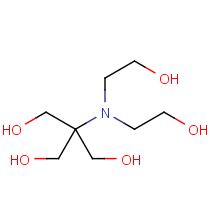
Name(En): N,N-Bis(2-Hydroxyethyl)Glycine
Product Name: N,N-二(羟乙基)甘氨酸(BICINE)
Alternative name: N,N-Bis(2-Hydroxyethyl)Glycine
CAS: 150-25-4
Product No: E0018
Formula: C6H13NO4
Weight: 163.1717
Hacceptors: 5
Hdonors: 3
WeightF
AI Product Description
*The following content is generated by AI and is for reference only.
N,N-Bis(2-hydroxyethyl)glycine, commonly known as Bicine, is a widely utilized biological buffering agent in biochemical and molecular biology research. With the chemical formula C6H13NO4 and CAS number 1079-68-9, this compound serves as an essential tool for maintaining stable pH conditions in aqueous solutions. Structurally, it consists of a glycine backbone substituted with two hydroxyethyl groups on the nitrogen atom, which contributes to its unique solubility and buffering characteristics.
Bicine functions effectively within a physiological pH range of approximately 7.6 to 8.8, making it particularly suitable for experiments involving enzymes, cell cultures, and protein purification where neutral to slightly alkaline environments are required. Unlike some other buffers, Bicine exhibits minimal interference with many enzymatic reactions and does not significantly chelate metal ions, ensuring that cofactor-dependent processes proceed without inhibition. Its high solubility in water allows for the preparation of concentrated stock solutions, facilitating ease of use in laboratory settings.
The primary applications of N,N-bis(2-hydroxyethyl)glycine include its role in electrophoresis buffers, chromatography systems, and cell culture media. It is frequently employed in the study of mitochondrial function, photosynthesis research, and various metabolic assays. Furthermore, due to its stability and lack of reactivity with common biological molecules, it is often preferred over Tris or phosphate buffers in specific experimental protocols where precise pH control is critical. Researchers value Bicine for its ability to maintain consistent reaction conditions over time, thereby enhancing the reproducibility of scientific data.
In industrial contexts, Bicine is also explored for use in pharmaceutical formulations and cosmetic products, leveraging its biocompatibility and gentle nature on tissues. Safety profiles indicate low toxicity, though standard laboratory precautions regarding skin and eye contact should always be observed. As a versatile and reliable buffer, N,N-bis(2-hydroxyethyl)glycine remains a staple in modern laboratories, supporting advancements across diverse fields of life sciences and biotechnology. Its continued popularity underscores the importance of selecting appropriate buffering agents to ensure experimental integrity and success.



 (All Rights Reserved)