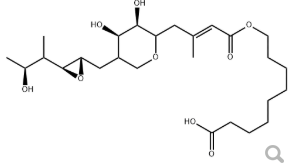
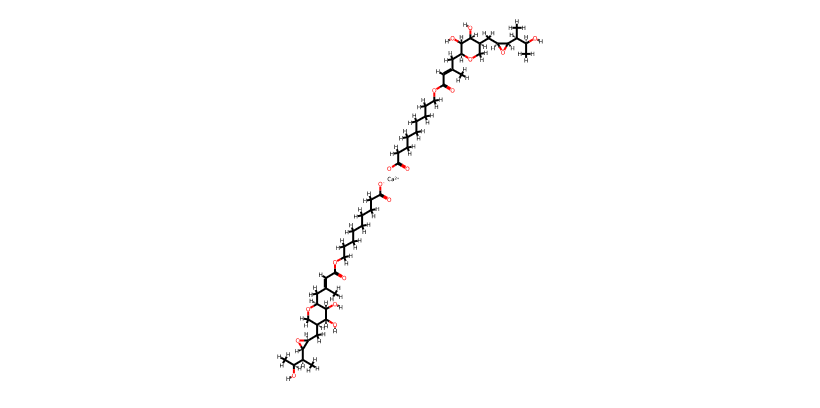
Mupirocin calcium (anhydrous) is the anhydrous form of the calcium salt of mupirocin. The dihydrate form is used as an antibacterial drug for the treatment of skin infections. It has a role as an antibacterial drug and a protein synthesis inhibitor.
*The following content is generated by AI and is for reference only.
Mupirocin Calcium is the calcium salt of mupirocin, a potent topical antibiotic widely utilized in clinical settings for treating skin infections. Its chemical identity is defined by the CAS number 73948-05-5, and its molecular formula is C21H36CaO7S. This compound acts as a highly selective inhibitor of bacterial isoleucyl-tRNA synthetase, an enzyme essential for protein synthesis within bacteria. By blocking this critical step, Mupirocin Calcium effectively halts bacterial growth, exhibiting broad-spectrum activity primarily against Gram-positive organisms. It is particularly renowned for its efficacy against methicillin-resistant Staphylococcus aureus (MRSA) and coagulase-negative staphylococci, making it a cornerstone therapy for impetigo, folliculitis, and other superficial pyoderma.
The drug is typically formulated as ointments or creams containing monoglycerides to enhance skin penetration and stability. While native mupirocin is often delivered in these lipid bases, the calcium salt form offers improved solubility and stability characteristics in certain pharmaceutical preparations. The mechanism of action is unique because it targets a specific bacterial enzyme not found in mammalian cells, thereby minimizing toxicity to human tissues and reducing the risk of systemic side effects when applied topically. Resistance to mupirocin can develop, particularly with prolonged or inappropriate use, leading to the emergence of high-level resistance strains that are less susceptible to treatment. Consequently, medical guidelines emphasize using the medication only for confirmed bacterial infections and adhering strictly to prescribed durations to preserve its long-term efficacy.
Beyond dermatology, research continues into its potential applications for decolonizing MRSA carriers in healthcare environments to prevent nosocomial outbreaks. Its safety profile remains excellent for external use on intact or compromised skin, though allergic contact dermatitis has been occasionally reported. As a first-line agent for localized skin infections, Mupirocin Calcium represents a vital tool in modern antimicrobial stewardship, balancing rapid bacterial clearance with a low risk of adverse reactions. Its continued relevance underscores the importance of developing effective topical therapies to combat increasingly resistant bacterial pathogens in both community and hospital settings.





 (All Rights Reserved)