Mupirocin is a topical antibiotic useful against superficial skin infections such as impetigo or folliculitis. It may also be used to get rid of methicillin-resistant S. aureus (MRSA) when present in the nose without symptoms. Due to concerns of developing resistance, use for greater than ten days is not recommended. It is used as a cream or ointment applied to the skin.
*The following content is generated by AI and is for reference only.
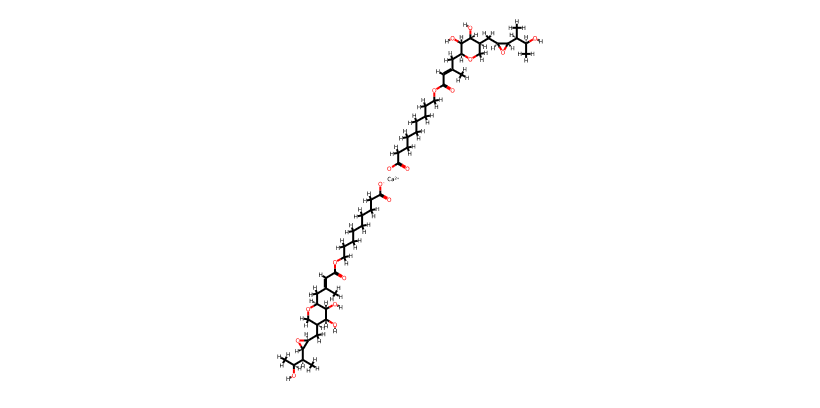
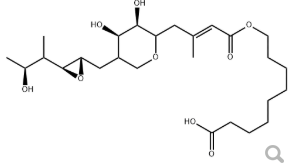
Mupirocin is a potent, naturally occurring antibiotic derived from the bacterium *Pseudomonas fluorescens*. It was originally discovered in 1972 and has since become a cornerstone therapy for treating superficial skin infections caused by Gram-positive bacteria. The compound is chemically known as 4-[(1S)-3-hydroxy-6-methyl-5-(propan-2-yl)oxiran-2-yl]pentanoic acid lactone derivative, with the specific molecular formula C20H34O5. Its unique chemical structure includes a moniliformin moiety linked to an alkenyl side chain, which is essential for its biological activity. The CAS number for Mupirocin is 12650-69-8, serving as a critical identifier for regulatory and pharmaceutical databases worldwide.
The primary mechanism of action involves the selective inhibition of bacterial isoleucyl-tRNA synthetase. By binding tightly to this enzyme, Mupirocin prevents the attachment of isoleucine to tRNA, thereby halting protein synthesis at an early stage. This process is highly specific to bacteria, resulting in minimal toxicity to human cells, which makes it safe for topical application on the skin. Consequently, Mupirocin is predominantly formulated as ointments or creams for external use. It is the first-line treatment for impetigo, a common contagious skin infection characterized by honey-colored crusts, particularly effective against *Staphylococcus aureus* and Streptococcus pyogenes. Furthermore, it is widely utilized for decolonizing methicillin-resistant *Staphylococcus aureus* (MRSA) from the nasal passages of patients prior to surgery to prevent post-operative infections. While resistance can develop through chromosomal mutations or plasmid-mediated mechanisms, Mupirocin remains a vital tool in modern dermatology and infectious disease management due to its high efficacy and favorable safety profile when used correctly under medical supervision.



 (All Rights Reserved)