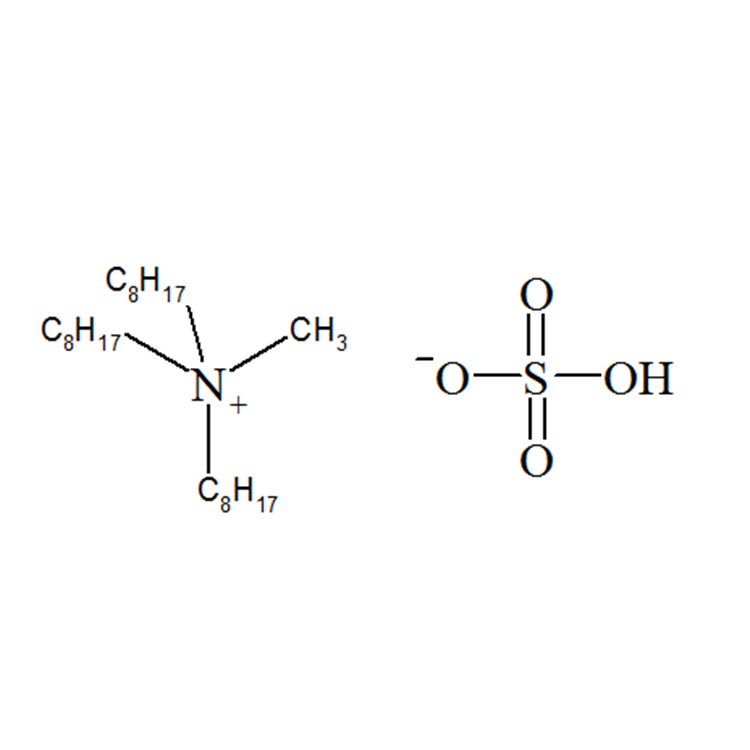
Product Name: Methyl trioctyl ammonium hydrogen sulfate
CAS number: 59158-14-4
Molecular formula: C15H54NHSO4
Molecular weight: 465.7735
Purity (content): 99%
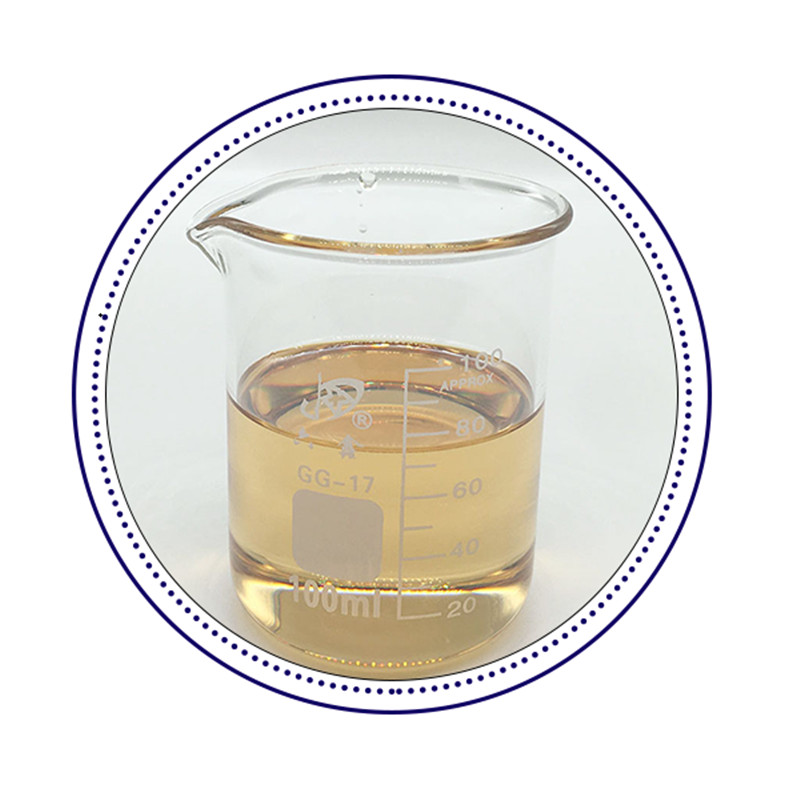
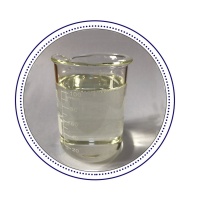
Property: Brown viscous liquid.
Usage: This product is a phase transfer catalyst.
Caution: Easy to absorb water, should be sealed and stored dry.
*The following content is generated by AI and is for reference only.
Methyl trioctyl ammonium hydrogen sulfate is a specialized quaternary ammonium salt widely utilized in industrial chemistry and separation processes. Its chemical identity is defined by the cationic structure of methyl trioctyl ammonium paired with a hydrogen sulfate anion. The compound is commonly identified by CAS Registry Number 68370-12-5, though specific variations may exist depending on the purity grade or supplier specifications. The molecular formula generally reflects the combination of one methyl group, three octyl chains attached to a central nitrogen atom, and the bisulfate counterion, resulting in a complex organic-inorganic hybrid structure that exhibits distinct physicochemical properties.
This substance functions primarily as an efficient phase transfer catalyst (PTC) and an ion-exchange reagent. In liquid-liquid extraction systems, it facilitates the transport of inorganic ions from an aqueous phase into an organic solvent phase, significantly enhancing reaction kinetics and yield in various synthetic pathways. Its amphiphilic nature allows it to stabilize interfaces between immiscible liquids, making it invaluable for extracting metal ions, such as rare earth elements or transition metals, from acidic solutions. Furthermore, it serves as a surfactant in specialized formulations where high thermal stability and solubility in non-polar media are required.
The hydrogen sulfate component imparts specific acidity characteristics, distinguishing it from chloride or bromide analogs of similar quaternary ammonium salts. This property makes it particularly suitable for applications involving acid-catalyzed reactions or conditions requiring controlled proton activity within the organic phase. Industries ranging from pharmaceutical manufacturing to hydrometallurgy leverage its unique capabilities to optimize purification protocols and reduce waste generation. As a versatile tool in green chemistry initiatives, Methyl trioctyl ammonium hydrogen sulfate helps minimize the use of hazardous solvents by improving extraction efficiency. However, handling requires standard safety precautions due to its potential corrosivity and environmental impact if not managed correctly. Overall, this compound represents a critical component in advanced chemical processing, bridging the gap between aqueous and organic domains to enable complex separations and syntheses with high precision.





 (All Rights Reserved)
![8-Oxa-1,3-diazaspiro[4.5]decane-2,4-dione](https://eimg.pharmasources.com/image/product/20250403/60fa7223d5a34f24138486ceea0ffb15jpg)
![6,8-Dioxo-5,7-diazaspiro[3.4]octane-2-carboxylic acid](https://eimg.pharmasources.com/image/product/20250403/02effeb5a7639bc84ff1f3add3c0c64fjpg)
![8,16-Diazadispiro[6.1.6.2]heptadecan-17-one](https://eimg.pharmasources.com/image/product/20250403/ca91cba8b87e53fc879f8d8764873a40jpg)
