Baicalin

| Product name |
Natural baicalin |
Latin name |
Scutellaria baicalensis georgi.L |
| Used part |
Root |
Appearence |
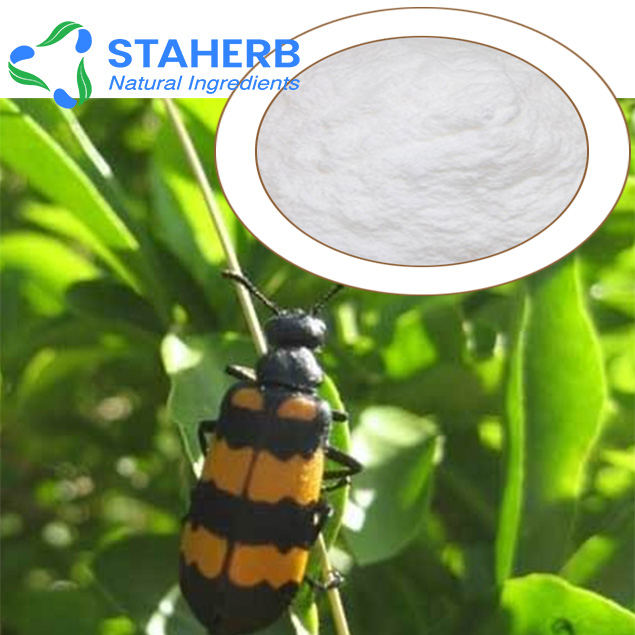
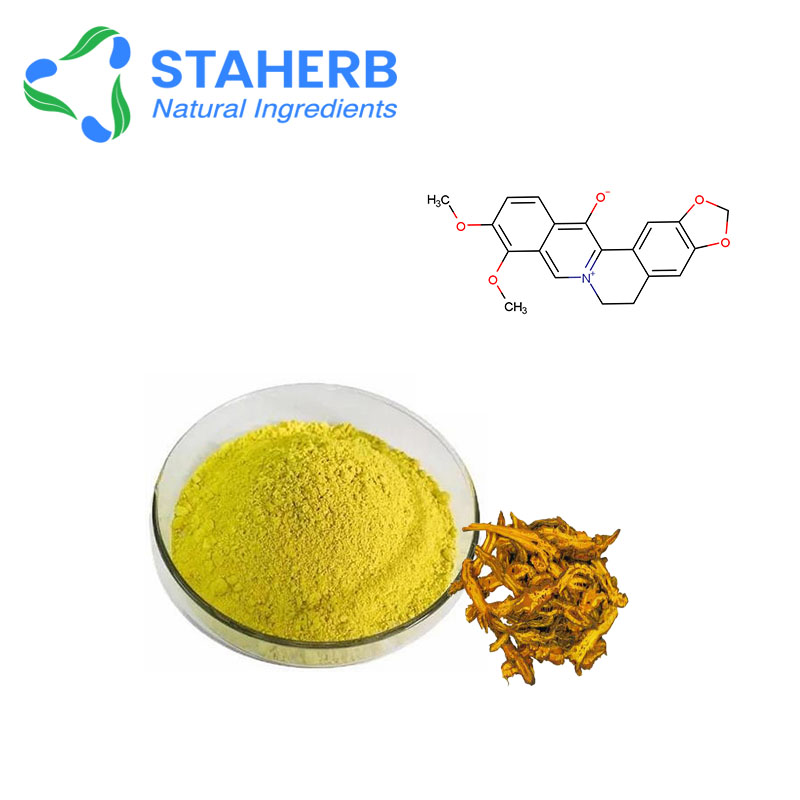
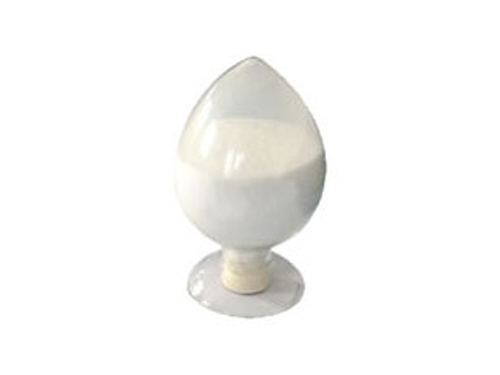
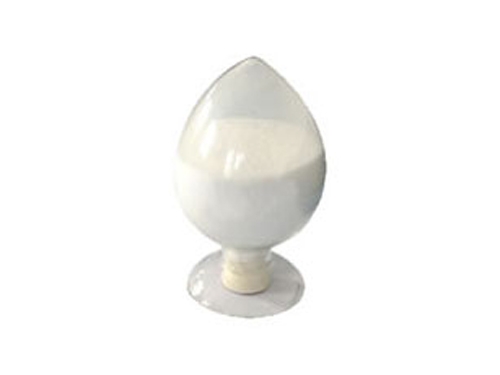
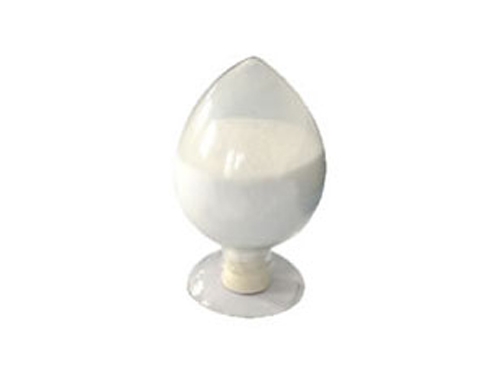
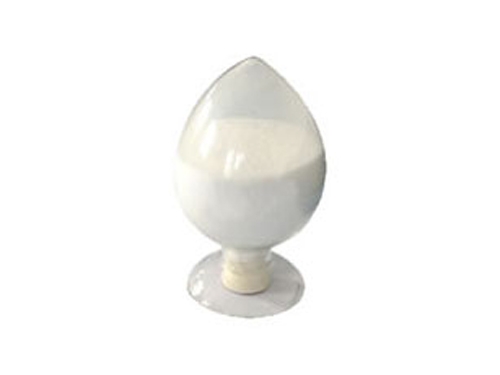
Light yellow powder |
| Odor |
Characteristic |
CAS NO. |
21967-41-9 |
| Molecular Formula |
C21H18O11 |
Molecular weight |
446.35 |
| Sulphated Ash |
<3.0% |
Loss on drying |
<3.0% |
| Total plate count |
<1000cfu/g |
Yeast&Mold |
<100cfu/g |
| E.Coli |
Negative |
S.Aureus |
Negative |
| Salmonella |
Negative |
Pesticides |
Negative |
Scutellaria baicalensis is different from a related plant called American scullcap (Scutellaria laterifolia). Used more extensively in Asia than in the Americas or Europe, scullcap contains active flavonoids, chemicals that have a wide range of effects in the body. Two of its flavonoids, baicalin and wogonin, are known to be anti-inflammatory. Inflammation is the body response to irritation, injury, or infection. It usually includes pain, redness, and swelling in the area of the damage and it can occur within body tissues as well as on the surface of the skin. Both oral and topical forms of scullcap are being tested to treat inflammatory conditions that range from dermatitis to inflammatory bowel disease.
*The following content is generated by AI and is for reference only.
Baicalin, a prominent bioactive flavonoid glycoside derived primarily from the roots of Scutellaria baicalensis (Chinese skullcap), is currently available at competitive market rates for industrial and research applications. With its molecular formula C21H18O11 and CAS Registry Number 21967-41-9, this high-purity compound serves as a critical standard in pharmaceutical development and natural product chemistry. The manufacturer offers Baicalin with exceptional quality assurance, ensuring consistent purity levels suitable for rigorous scientific analysis and therapeutic formulation.
This versatile compound exhibits a broad spectrum of pharmacological activities, making it a focal point in modern drug discovery. Its primary mechanisms involve potent anti-inflammatory, antioxidant, antiviral, and neuroprotective properties. In clinical research, Baicalin is extensively studied for its ability to modulate immune responses and inhibit viral replication, including strains of influenza and hepatitis viruses. Furthermore, emerging evidence suggests its efficacy in managing cardiovascular disorders by improving endothelial function and reducing oxidative stress. It also demonstrates significant potential in cancer therapy through the induction of apoptosis in various tumor cell lines without causing substantial harm to healthy tissues.
In the food and cosmetic industries, Baicalin is increasingly utilized as a natural preservative and skin-whitening agent due to its capacity to scavenge free radicals and inhibit melanin production. Manufacturers supply this compound in various forms, including pure powder and standardized extracts, catering to diverse needs from laboratory testing to large-scale commercial production. The current promotional pricing makes this premium ingredient accessible to a wider range of researchers and manufacturers globally. By sourcing Baicalin directly from reputable suppliers, businesses can secure a reliable supply chain for developing next-generation health solutions. Whether for academic investigation or commercial product formulation, this high-quality Baicalin represents an essential component in advancing holistic medicine and functional wellness products today.