Product Description
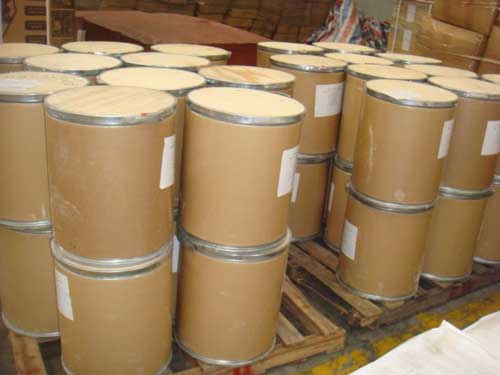
Lignin Alkali ≥98.0% supplier Colorant Food Additive made in china 9005-53-2
AI Product Description
*The following content is generated by AI and is for reference only.
Lignin Alkali, a high-purity natural polymer derived from wood pulp and agricultural residues, serves as a versatile raw material across multiple industrial sectors. With a guaranteed purity of ≥98.0%, this sodium lignosulfonate or alkaline lignin variant is primarily sourced from China, where advanced extraction technologies ensure consistent quality for global markets. While often associated with industrial applications such as concrete admixtures, dispersants, and binder agents in animal feed, it is increasingly explored for specialized uses in the food and cosmetic industries due to its rich antioxidant properties and biodegradability.
The chemical composition of Lignin Alkali is complex, consisting of phenylpropane units linked by ether and carbon-carbon bonds. It does not possess a single molecular formula or CAS number in the traditional sense because lignin is a heterogeneous macromolecule rather than a small molecule compound. However, commercial grades are typically identified under CAS No. 8061-51-6 (Sodium Lignosulfonate) or generic lignin identifiers depending on the specific modification process. Its alkaline nature facilitates solubility in water, making it an excellent emulsifier and stabilizer. In the food sector, though not universally approved as a direct colorant, modified lignin derivatives function as natural coloring agents or anti-caking agents in certain formulations, offering a sustainable alternative to synthetic dyes. Furthermore, its strong chelating ability allows it to enhance product stability in various additive systems.
Manufacturers in China leverage abundant biomass resources to produce this eco-friendly additive at competitive prices, meeting stringent international standards for heavy metals and impurities. The product supports green chemistry initiatives by utilizing waste streams from the paper industry. Beyond food and cosmetics, it remains critical in construction for reducing water content in cement mixes and in agriculture as a soil conditioner. As regulatory frameworks evolve to favor bio-based ingredients, the demand for high-purity Lignin Alkali continues to grow, positioning it as a key component in sustainable manufacturing processes worldwide. Its multifunctional profile ensures its relevance in developing next-generation materials that balance performance with environmental responsibility.





 (All Rights Reserved)
![(3R)-3-Amino-1-[3-(Trifluoromethyl)-5,6,7,8-Tetrahydro-1,2,4-Triazolo[4,3-A]Pyrazin-7-yl]-4-(2,4,5-T](https://eimg.pharmasources.com/image/product/20250402/e43f5153f3b91f760fdee40247460568jpg)
![3-(Trifluoromethyl)-5,6,7,8-Tetrahydro-[1,2,4]Triazolo[4,3-a]Pyrazine HCL](https://eimg.pharmasources.com/image/product/20250402/8ae4dd18f1fe219e41ad63ce9b3306d7jpg)

![4-[[[[6-[(Diethylamino)methyl]-2-naphthalenylmethoxy]carbonyllaminolbenzoic acid](https://eimg.pharmasources.com/image/20241206/xJCFsdgfMrHzqjtgeOixhGQHgVbKi7kAcoEqemzE.jpg)
