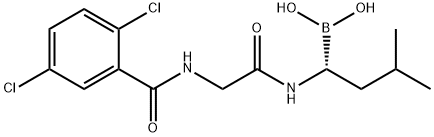
Ixazomib, a second-generation proteasome inhibitor, is used primarily in the treatment of multiple myeloma. This activity outlines the mechanism of action, indications, and contraindications for ixazomib as a valuable agent for treating multiple myeloma.
*The following content is generated by AI and is for reference only.
Ixazomib Citrate, identified by the CAS number 1201902-80-8, is a pharmaceutical compound serving as the citrate salt form of Ixazomib. Its molecular formula is C24H36N6O5, representing a complex organic structure designed for enhanced stability and solubility in clinical formulations. As a member of the boronic acid-based proteasome inhibitor class, Ixazomib functions by selectively inhibiting the chymotrypsin-like activity of the 26S proteasome within cells. This inhibition prevents the degradation of ubiquitinated proteins, leading to an accumulation of misfolded proteins that triggers apoptotic cell death, particularly in rapidly dividing malignant cells.
Clinically, Ixazomib Citrate is primarily utilized in the treatment of multiple myeloma, a cancer of plasma cells. It is often administered orally in combination with lenalidomide and dexamethasone for patients who have received at least one prior therapy. The oral bioavailability of this agent offers significant advantages over intravenous alternatives, allowing for convenient outpatient administration and improved patient quality of life during long-term maintenance regimens. By targeting the proteasome pathway, it disrupts critical cellular processes required for tumor survival and proliferation.
The development of Ixazomib represents a major advancement in oncology, providing a non-invasive option for managing relapsed or refractory multiple myeloma. While generally well-tolerated, common side effects may include peripheral neuropathy, thrombocytopenia, and gastrointestinal disturbances. Ongoing research continues to explore its efficacy in other hematological malignancies and novel combination therapies. The citrate salt formulation ensures consistent pharmacokinetic profiles, making it a reliable tool in modern hematology-oncology protocols. Its introduction has expanded the therapeutic arsenal available to clinicians fighting aggressive blood cancers, offering hope for extended survival rates and better disease control in difficult-to-treat cases.








 (All Rights Reserved)