Product Description
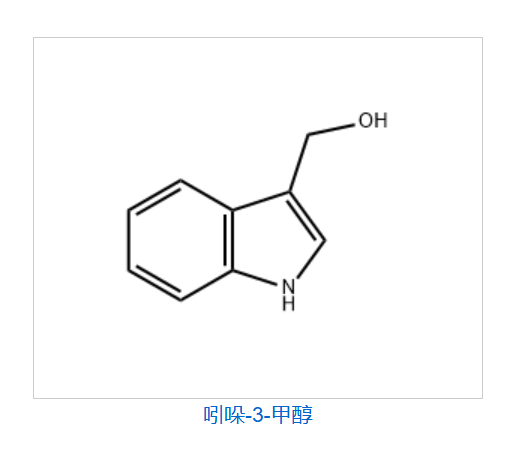
吲哚-3-甲醇化学性质熔点:96-99°C(lit.)沸点:267.28°C(roughestimate)密度:1.1135(roughestimate)折射率:1.5670(estimate)储存条件:2-8°C溶解度:solubleinMethanol形态:CrystallinePowderoChemicalbookrFlakes酸度系数(pKa):15.10±0.10(Predicted)颜色:Off-whitetoyellow-orangeBRN:121323稳定性:2-80CInChI:InChI=1S/C9H9NO/c11-6-7-5-10-9-4-2-1-3-8(7)9/p-5,10-11H,6H2
AI Product Description
*The following content is generated by AI and is for reference only.
Indole-3-carbinol (I3C) is a naturally occurring phytochemical derived from the hydrolysis of glucobrassicin, a compound found abundantly in cruciferous vegetables such as broccoli, cabbage, Brussels sprouts, and kale. With the chemical formula C9H7NO2 and the CAS registry number 68-46-2, this indole derivative serves as a critical dietary supplement widely recognized for its potential chemopreventive properties. Upon ingestion, I3C undergoes rapid acid-catalyzed condensation in the stomach to form various cyclic oligomers, most notably diindolylmethane (DIM), which are believed to be the primary active metabolites responsible for its biological effects.
The principal application of Indole-3-carbinol lies in oncology research and nutritional support, particularly regarding hormone-dependent cancers. Extensive studies suggest that I3C modulates estrogen metabolism by shifting the balance toward less potent estrogenic forms, thereby offering protective benefits against breast, cervical, and prostate cancers. Furthermore, it exhibits potent antioxidant and anti-inflammatory activities, helping to neutralize free radicals and reduce oxidative stress within cellular structures. Beyond cancer prevention, I3C is utilized in dermatological treatments for conditions like recurrent respiratory papillomatosis, where it has shown efficacy in reducing lesion recurrence rates when administered orally or topically.
In the industrial and supplement sectors, I3C is marketed as a natural health product due to its safety profile and ability to support detoxification pathways via the activation of phase II enzymes. While generally considered safe with minimal side effects at recommended dosages, clinical usage often requires professional guidance to optimize absorption and efficacy, especially given its variable bioavailability depending on individual gastric pH levels. As research continues to evolve, the focus remains on elucidating precise mechanisms of action and developing stable delivery systems to maximize therapeutic outcomes. Overall, Indole-3-carbinol stands as a significant example of how dietary components can influence human health, bridging the gap between nutrition and pharmaceutical intervention in the prevention and management of chronic diseases.




![8,16-Diazadispiro[6.1.6.2]heptadecan-17-one](https://eimg.pharmasources.com/image/product/20250403/ca91cba8b87e53fc879f8d8764873a40jpg)

![6,8-Dioxo-5,7-diazaspiro[3.4]octane-2-carboxylic acid](https://eimg.pharmasources.com/image/product/20250403/02effeb5a7639bc84ff1f3add3c0c64fjpg)
![8-Oxa-1,3-diazaspiro[4.5]decane-2,4-dione](https://eimg.pharmasources.com/image/product/20250403/60fa7223d5a34f24138486ceea0ffb15jpg)





 (All Rights Reserved)