Product Description
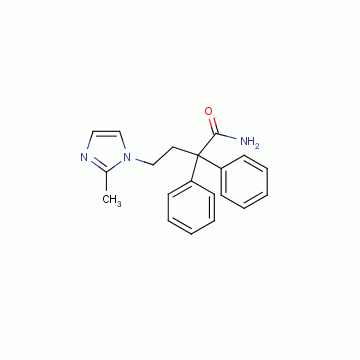
Imidafenacin
CAS NO. 170105-16-5
Chemical name:4-(2-METHYL-1H-IMIDAZOL-1-YL)-2,2-DIPHENYLBUTANAMIDE
Product code:A019
Molecular formula:C20H21N3O
Molecular weight: 319.4
Content:≧99.0%
Description:White to light yellow powder
Storage:Be kept airtight,dry and in cool place
Packing specification:According to the customer request
AI Product Description
*The following content is generated by AI and is for reference only.
Imidafenacin is a potent, selective muscarinic M3 receptor antagonist developed primarily for the treatment of overactive bladder (OAB) syndrome. Chemically known as 4-(2-[(5,6-dimethylpyrazin-2-yl)methoxy]phenyl)-1-methylpiperidine, it belongs to the class of anticholinergic agents designed to relax the detrusor muscle in the urinary bladder. Its molecular formula is C19H25N3O, and it carries the CAS Registry Number 208568-75-6. The compound was originally synthesized by Daiichi Sankyo Co., Ltd. and has gained significant clinical traction, particularly in Japan where it is marketed under the brand name Uceris, though its global availability varies by region.
The primary mechanism of action involves the selective blockade of muscarinic M3 receptors located on the smooth muscle cells of the bladder. By inhibiting these receptors, Imidafenacin prevents acetylcholine from binding, thereby reducing involuntary bladder contractions. This pharmacological activity leads to a decrease in urinary frequency, urgency, and urge incontinence, significantly improving the quality of life for patients suffering from OAB. A key advantage of Imidafenacin compared to older antimuscarinic drugs is its higher selectivity for the M3 receptor subtype. This selectivity aims to minimize systemic side effects typically associated with non-selective anticholinergics, such as dry mouth, constipation, blurred vision, and cognitive impairment, although mild anticholinergic effects can still occur.
Clinically, Imidafenacin is administered orally, usually in tablet form, with dosing adjusted based on patient response and tolerability. It is indicated for adults who have not responded adequately to behavioral therapies or other conservative management strategies. While generally well-tolerated, clinicians must exercise caution when prescribing it to patients with urinary retention, gastric retention, or uncontrolled narrow-angle glaucoma due to its anticholinergic properties. Extensive research continues to explore its efficacy in combination with other therapies and its long-term safety profile in diverse populations. As a modern therapeutic agent, Imidafenacin represents an important advancement in urological pharmacotherapy, offering a targeted approach to managing bladder dysfunction while striving to maintain patient comfort and compliance through reduced adverse event profiles.





 (All Rights Reserved)

![N-[3-Fluoro-4-[6-(2-methyl-2H-tetrazol-5-yl)-3-pyridinyl]phenyl]carbamic acid phenylmethyl ester](https://eimg.pharmasources.com/img_Cphi_en/Product/2018_08/Mimg_1808171123640937.jpg)