Product Description
We are professional Raw Material Manufacturer, with more than 10 years' experience.
Please contact us for more information and detailed quotation
Email: sales12@sgonekbio.com
Phone/WhatsApp/Wechat: +86 13572550462

AI Product Description
*The following content is generated by AI and is for reference only.
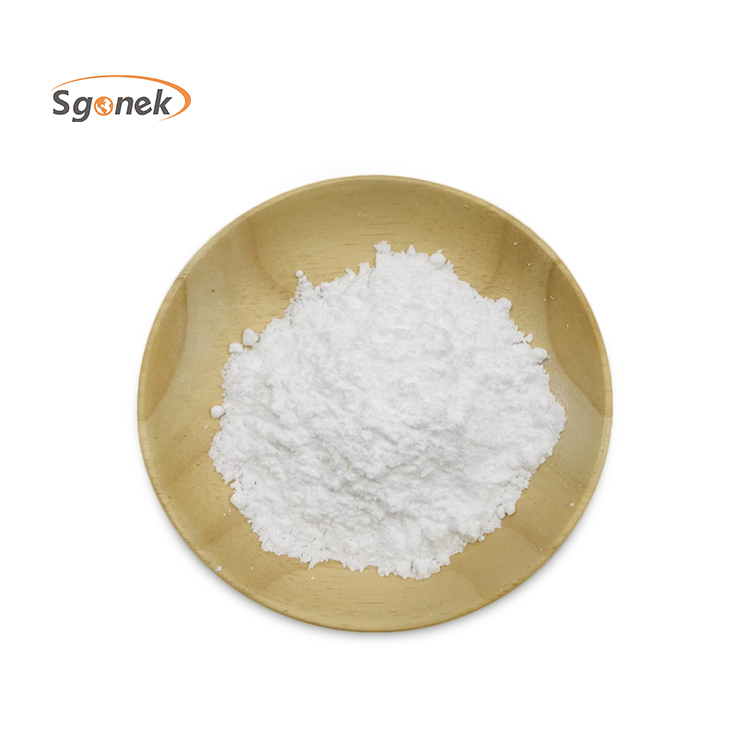
Glycine Hydrochloride, commonly known as Glycine HCl or 2-Aminoacetic acid hydrochloride, is a versatile chemical compound widely utilized in both industrial and laboratory settings. As the hydrochloride salt of glycine, the simplest amino acid, this white to off-white crystalline powder possesses excellent water solubility and stability under standard storage conditions. Its molecular formula is C₂H₆ClNO₂, reflecting its composition of two carbon atoms, six hydrogen atoms, one chlorine atom, one nitrogen atom, and two oxygen atoms. The substance is uniquely identified by the CAS Registry Number 56-40-6, which serves as a universal identifier for precise chemical tracking and regulatory compliance globally.
In terms of applications, Glycine Hydrochloride plays a critical role in biochemistry and pharmaceutical research. It is frequently employed as a buffering agent to maintain specific pH levels during protein purification, enzyme assays, and electrophoresis procedures. Due to its ability to stabilize peptide bonds and prevent aggregation, it is essential in the synthesis of peptides and proteins, ensuring high yield and purity in recombinant DNA technology. Furthermore, the compound finds utility in analytical chemistry as a derivatizing agent for amino acid analysis, facilitating accurate quantification through chromatographic techniques like HPLC.
Beyond the laboratory, Glycine Hydrochloride is used in the manufacturing of certain agrochemicals and as an intermediate in organic synthesis. Its mild acidic nature makes it suitable for adjusting acidity in various formulations without introducing harsh contaminants. In the food industry, while less common than pure glycine, it may serve as a flavor enhancer or preservative component in specialized products. Safety data indicates that while generally safe to handle with standard precautions, it can be irritating to the eyes and respiratory tract if inhaled as dust. Proper ventilation and personal protective equipment are recommended during handling. Overall, Glycine Hydrochloride remains an indispensable reagent for scientists and manufacturers seeking reliable, high-purity solutions for complex chemical and biological processes, bridging the gap between fundamental research and large-scale production.











 (All Rights Reserved)