Product Description
Model Item Size/mm power/W Luminous flux/LM lighting effectLM/W Kelvin/K Ra IP Level Installation methods
YJSFA1*18W-ZO-XD 1266x73x97 18W 1950
110 3000 4500 6500 ≥80 IP65
Ceiling�mounted
YJSFA2*18W-ZO-XD 1266x114x97 36W 3960
YJSFA3*18W-ZO-XD 1266*160*90 54W 5940
AI Product Description
*The following content is generated by AI and is for reference only.
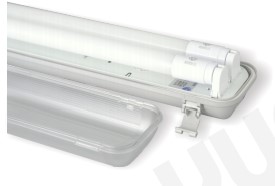
The YJSFA series represents a robust class of industrial-grade lighting fixtures designed specifically for environments demanding the highest levels of safety and reliability. These units are engineered with a fully sealed, impact-resistant plastic housing that provides complete protection against dust ingress, water jets, and corrosive chemicals. This "triple-proof" construction ensures the internal components remain dry and clean, making them ideal for harsh operational settings such as petrochemical plants, wastewater treatment facilities, marine vessels, mining operations, and food processing factories where hygiene and explosion risks are critical concerns.
The primary function of these lamps is to deliver consistent, high-intensity illumination while maintaining structural integrity under extreme conditions. The polycarbonate or reinforced plastic lens offers superior optical transmission and resistance to UV degradation, preventing yellowing over time. Internally, they typically utilize advanced LED technology which not only reduces energy consumption significantly compared to traditional metal halide or fluorescent sources but also extends service life to tens of thousands of hours. This longevity minimizes maintenance frequency, a crucial factor in hard-to-reach locations where bulb replacement involves significant downtime or safety hazards.
When installing or operating these fixtures, several precautions must be observed to ensure optimal performance and user safety. First, although the unit is weatherproof, it is essential to verify that all cable glands and entry points are properly tightened to maintain the IP66 or IP67 rating specified by the manufacturer. Second, while the exterior is non-conductive, electrical connections must always be made by qualified personnel following local codes to prevent short circuits. Third, cleaning should be performed using mild detergents and soft cloths; abrasive materials or high-pressure steam can damage the sealant or scratch the lens, compromising the protective barrier. Finally, despite their durability, avoid subjecting the fixture to direct mechanical impact beyond its rated IK level, as excessive force could crack the housing. Regular inspection of the sealing gaskets is recommended to detect any wear or aging that might reduce environmental protection capabilities. By adhering to these guidelines, operators can maximize the lifespan and efficiency of this reliable lighting solution in challenging industrial applications.





 (All Rights Reserved)