Product Description
- CAS No.:
557756-85-1
- Synonyms:
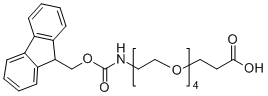
Fmoc-NH-PEG4-CH2CH2COOH
- Purity:
≥95%
- Molecular formula:
C26H33NO8
- Molecular weight:
487.5
- Uses:
Applicated in medical research, drug-release, nanotechnology and new materials research, cell culture. In the study of ligand, polypeptide synthesis support, a graft polymer compounds, new materials, and polyethylene glycol-modified functional coatings and other aspects of the active compound.
AI Product Description
*The following content is generated by AI and is for reference only.
Fmoc-NH-PEG4-COOH is a versatile heterobifunctional polyethylene glycol (PEG) linker widely utilized in peptide synthesis, bioconjugation, and the development of antibody-drug conjugates. Its chemical structure comprises a 9-fluorenylmethoxycarbonyl (Fmoc) protecting group attached to an amino terminus and a carboxylic acid moiety at the opposite end, separated by a tetra-ethylene glycol spacer chain. The molecular formula for this reagent is C25H31NO7, with a molecular weight of approximately 449.51 g/mol. While specific catalog numbers vary by supplier, it does not always possess a unique CAS number as a distinct commercial entity in some databases, though its components are well-documented; however, it is often referenced under generic PEG linker identifiers or synthesized from Fmoc-amino-PEG precursors.
The primary utility of Fmoc-NH-PEG4-COOH lies in solid-phase peptide synthesis (SPPS). The Fmoc group provides orthogonal protection, allowing the amine to remain stable during acidic deprotection cycles while enabling selective removal using mild bases like piperidine when required. This feature makes it ideal for incorporating PEG spacers into complex peptide sequences without interfering with other protecting groups. Conversely, the terminal carboxyl group serves as a reactive handle for coupling reactions with amines on proteins, drugs, or fluorophores using standard carbodiimide chemistry or active ester methods.
In drug discovery, this linker is crucial for enhancing the pharmacokinetic properties of therapeutic peptides. By introducing the hydrophilic PEG4 chain, researchers can significantly improve water solubility, reduce immunogenicity, and extend serum half-life through reduced renal clearance. Furthermore, the controlled spacing provided by the four ethylene glycol units ensures that the conjugated payload retains biological activity while being sufficiently shielded from enzymatic degradation. Consequently, Fmoc-NH-PEG4-COOH remains an essential building block for medicinal chemists designing next-generation biotherapeutics, diagnostic probes, and high-affinity ligands where precise spatial orientation and stability are paramount.




 (All Rights Reserved)